Top 10 Types of Corrugated Steel Pipe for Global Buyers

Choosing the right Corrugated Steel Pipe requires more than comparing prices, diameters, and delivery dates. Global buyers must examine soil chemistry, rainfall intensity, traffic loads, installation depth, and expected service life. A pipe that performs well beneath a rural access road may fail in saline coastal ground. Small details matter.

David C. Currence, P.E., a recognized corrugated steel pipe specialist, has stated, “The right pipe selection begins with the site, not the catalog.” This practical principle shapes our guide. Each pipe type offers distinct benefits, including galvanized protection, aluminized coatings, polymer laminations, structural strength, flexible installation, or improved resistance to aggressive environments. The best option depends on evidence from the project location.

This article reviews ten important types of Corrugated Steel Pipe for international purchasers. It considers common applications, material characteristics, connection methods, and installation conditions. Readers will see where each design fits, from highway culverts and stormwater channels to agricultural drainage and temporary crossings. Technical standards and supplier documentation still require careful checking. They should not be treated as paperwork alone.

Experience also reveals uncomfortable limitations. A stronger coating cannot correct poor bedding. A larger diameter cannot solve every hydraulic problem. Even experienced buyers can overlook soil acidity or maintenance access. That is why this overview combines engineering principles with practical purchasing questions. The list is useful, but not perfect. Local design review remains essential before any final order.

Top 10 Types of Corrugated Steel Pipe for Global Buyers

Corrugated Steel Pipe Basics: Structure, Materials, and Manufacturing

Top 10 Types of Corrugated Steel Pipe for Global Buyers

Corrugated Steel Pipe Basics: Structure, Materials, and Manufacturing

Corrugated steel pipe gains strength from its repeated ridges and valleys. These corrugations increase stiffness without requiring excessive steel thickness. The pipe wall commonly uses galvanized steel, aluminized steel, or polymer-coated steel. Each material responds differently to moisture, soil chemistry, abrasion, and temperature. Galvanized surfaces suit many drainage projects. More aggressive environments may require additional coating protection. Material selection should follow tested site data, not habit.

Common profiles include annular, helical, deep-corrugated, and structural plate designs. Annular corrugations run around the pipe. Helical corrugations follow a continuous spiral seam. Larger diameters often use bolted structural plates assembled on site. Shape, depth, pitch, and thickness influence load capacity. A small profile change can affect hydraulic flow and installation behavior. Details matter.

Manufacturing usually includes coil preparation, forming, corrugating, joining, coating, and inspection. Factories check dimensions, seam quality, coating coverage, and visible defects. Qualified buyers should request material certificates and test records. They should also confirm the design loads, bedding conditions, and expected service environment. A pipe may pass factory checks yet perform poorly with weak backfill or careless handling. No profile is perfect. Field conditions still deserve honest review.

Ten Major Types of Corrugated Steel Pipe for Global Applications

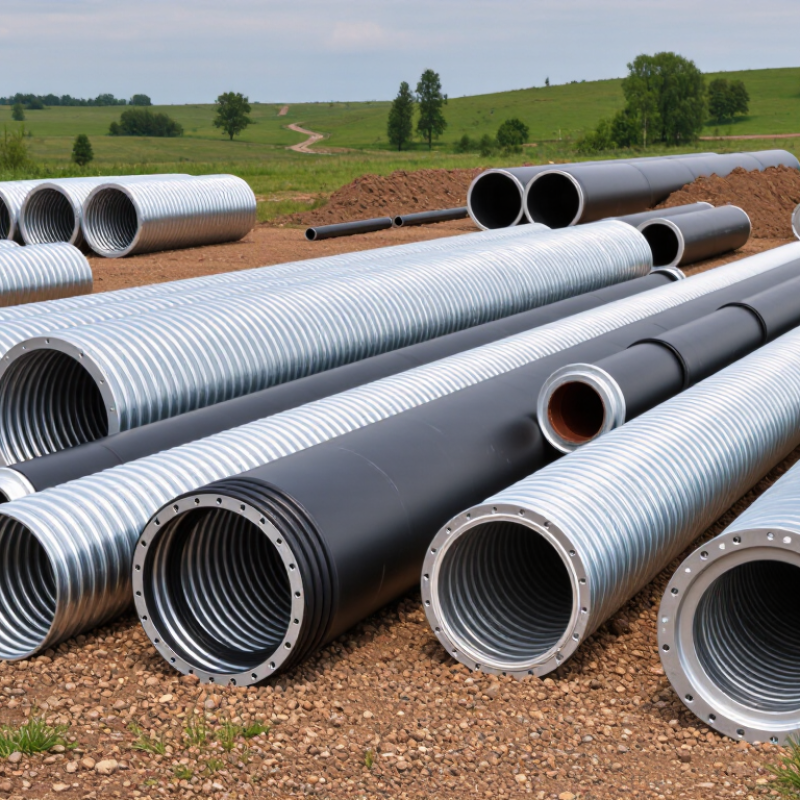
Ten major types of corrugated steel pipe support different global applications. Site soil, rainfall, traffic load, and maintenance access affect the selection. Common options include galvanized round pipe, aluminized round pipe, polymer-coated pipe, structural-plate pipe, helical pipe, annular pipe, perforated pipe, pipe-arch, open-arch, and box-shaped corrugated steel structures. Each type requires separate design verification.

Galvanized round pipe suits drainage beneath roads, farms, and small bridges. Aluminized pipe performs well where moisture and moderate chemical exposure may shorten service life. Polymer-coated pipe adds protection in aggressive soils, although damaged coating needs careful repair. Structural-plate pipe handles larger spans and heavier loads after field assembly. Helical and annular pipes offer different seam patterns, stiffness, and installation methods. Small details matter.

Perforated pipe supports subsurface drainage around retaining walls and foundations. Pipe-arch and open-arch shapes provide wider flow paths when vertical clearance is limited. Box-shaped structures suit large waterways, wildlife passages, and highway crossings. Engineers should confirm hydraulic capacity, cover depth, soil interaction, connection strength, and local standards before ordering. Experienced inspectors check coating thickness, bolt tightening, bedding, and backfill layers on site. One weak backfill lift can distort the pipe.

No selection is perfect. A thicker wall may improve strength but increase handling costs. A durable coating may still fail under careless transport. Project teams should compare service life, installation skill, inspection access, and total lifecycle cost rather than price alone. Test data helps, but field conditions can still surprise the design.

Key Specifications: Diameter, Corrugation Profiles, Coatings, and Strength

Top 10 Types of Corrugated Steel Pipe for Global Buyers

Key Specifications: Diameter, Corrugation Profiles, Coatings, and Strength

Corrugated steel pipe comes in several forms, including round pipe, pipe arch, structural plate, perforated pipe, and helical pipe. Each type serves different drainage, culvert, or underground infrastructure needs. Diameter affects flow capacity and installation space. Small pipes suit roadside drainage, while larger diameters support high-volume water movement. Measure the internal diameter carefully. Nominal size can vary by manufacturing method.

Corrugation profiles also influence strength and flexibility. Deep corrugations improve stiffness, while shallow profiles may simplify handling. Annular corrugations support consistent ring strength. Helical corrugations can provide efficient production and smooth alignment. Coating selection depends on soil chemistry, moisture, abrasion, and expected service life. Galvanized steel offers practical corrosion resistance. Aluminum-based coatings can perform well in demanding environments. Polymer coatings add another protective layer, but damage during transport needs inspection.

Tips: Confirm diameter, profile, steel thickness, and coating before ordering. Request test documents and installation guidance. Check local load requirements. A stronger pipe is not always the best choice. It may increase cost without improving performance. I have seen specifications copied between projects, even when soil conditions differed. That shortcut deserves review. Strength depends on the pipe, bedding, backfill, and workmanship together. Inspect coating edges and field connections before backfilling. Small defects can become expensive problems.

How to Compare Pipe Types by Use, Soil Conditions, and Load Requirements

Choosing among the top ten types of corrugated steel pipe starts with its intended use. A driveway culvert needs different performance than a stormwater tunnel. Plain galvanized pipe often suits small drainage crossings and moderate exposure. Polymer-coated or aluminized pipe can provide stronger corrosion resistance in aggressive environments. Perforated pipe supports subsurface drainage, while structural plate systems serve large spans and deeper installations. Shape matters too. Round, pipe-arch, and arch profiles distribute space differently beneath roads.

Soil conditions can change the correct choice. Clean, well-compacted gravel supports reliable backfill around flexible pipe. Wet clay may create uneven pressure and settlement. High groundwater can also carry corrosive chemicals toward the pipe wall. Check soil pH, resistivity, moisture, and chloride levels before selecting a coating. Do not judge soil by appearance alone. A gray trench can hide severe corrosion risks.

Load requirements deserve practical calculation. Consider cover depth, truck traffic, wheel loads, installation quality, and seasonal movement. A heavy-duty pipe may fail early if its bedding is poorly compacted. Experience shows that installation errors often matter as much as steel thickness. Project drawings, local standards, and manufacturer data should be reviewed by a qualified engineer. A simple comparison table helps, but it cannot replace site testing. The cheapest type is not always the lowest-cost option. That lesson is easy to miss.

Top 10 Types of Corrugated Steel Pipe for Global Buyers

How to compare pipe types by use, soil conditions, and load requirements

The chart uses a comparative engineering screening index from 1 to 5. Higher values indicate stronger suitability for the listed factor. Annular profiles are commonly used for standard drainage, while deeper corrugations and structural-plate systems are generally better suited to heavier earth loads, larger spans, and difficult soil conditions. Final selection should be verified against applicable standards, coating requirements, soil chemistry, hydraulic calculations, cover depth, and project-specific loading.

International Standards, Sourcing Factors, and Buyer Selection Criteria

Top 10 Types of Corrugated Steel Pipe for Global Buyers

International Standards, Sourcing Factors, and Buyer Selection Criteria

For global buyers, the ten common options include annular, helical, structural plate, perforated, galvanized, aluminized, polymer-coated, stainless steel, double-wall, and arch pipes. Each type serves different drainage, culvert, stormwater, or underground conveyance conditions. Annular pipes suit standard installations, while structural plate systems support larger spans and field assembly. Perforated designs help collect groundwater, but they require suitable filter material.

Standards must match the destination market and project authority. ASTM A760 and AASHTO M36 are widely referenced for corrugated steel pipe. European projects may use EN-based steel, coating, and fabrication requirements. Buyers should confirm edition dates, testing methods, dimensional tolerances, and permitted coating systems. A certificate alone is not enough. Independent verification may be necessary.

Sourcing decisions should begin with soil chemistry, flow rate, burial depth, traffic loading, diameter, and service life. Ask suppliers for mill certificates, coating thickness records, weld details, inspection reports, and traceability documents. Check joint design, gasket compatibility, packaging, port handling, and replacement availability. A low unit price can become expensive after corrosion repairs or difficult installation. In practical procurement reviews, buyers sometimes compare prices before checking site conditions. That approach needs reconsideration. A small sample test, drawing review, and written compliance matrix can expose gaps before production. Not every “standard” pipe fits every standard.

Top