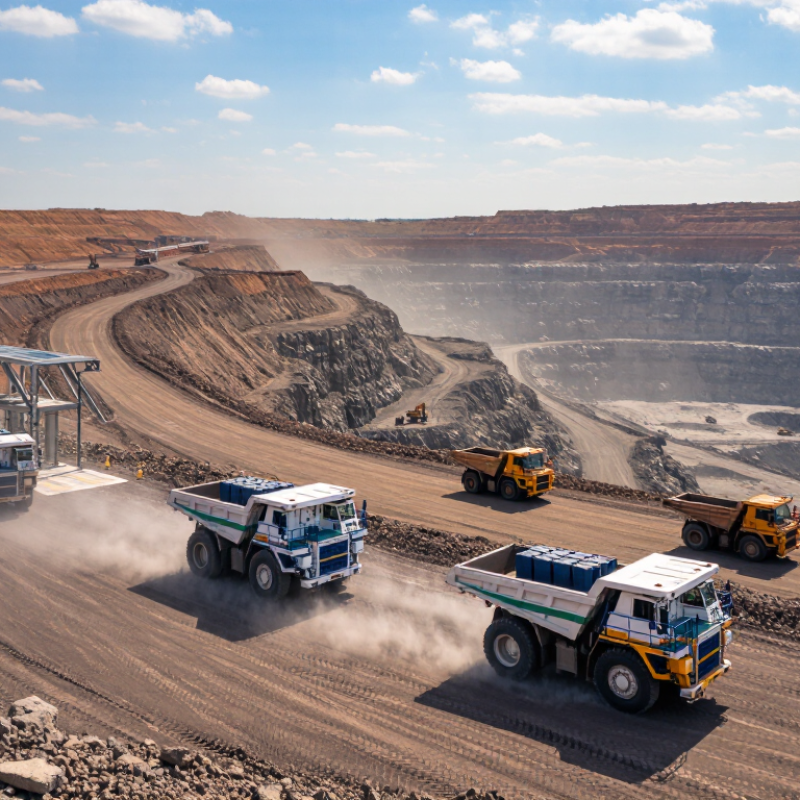
| 1 | 6×4 battery-electric rigid dump truck | Approximately 20–30 tonnes | Rechargeable battery with electric traction motors | Urban construction, quarry work, and short-haul material transport | Commercial options vary by market | Check legal axle loads, loaded range, charger compatibility, and access to depot charging. |
| 2 | 8×4 battery-electric rigid dump truck | Approximately 30–40 tonnes | Rechargeable battery with electric drive | Higher-volume road construction and regional aggregate delivery | Market-dependent commercial availability | Compare payload after battery installation, route gradients, daily distance, and charging windows. |
| 3 | Articulated battery-electric dump truck | Approximately 25–40 tonnes | Battery-electric; some configurations use regenerative braking | Quarries, earthworks, and rough off-road sites with repeated haul cycles | Limited and configuration-dependent | Evaluate traction on soft ground, loaded cycle time, battery runtime, and site charging access. |
| 4 | High-capacity articulated electric dump truck | Approximately 35–50 tonnes | Battery-electric where offered; confirm the exact powertrain | Large earthmoving projects and high-volume off-road hauling | Limited; verify local supply and support | Confirm that the rated payload applies to the electric version and check charger, tire, and service requirements. |
| 5 | Compact underground battery-electric haul truck | Approximately 15–30 tonnes | Rechargeable battery with electric traction | Underground mines with compact headings and ventilation constraints | Established specialist segment | Check tunnel dimensions, battery exchange or charging method, fire-safety provisions, and ramp performance. |
| 6 | Large underground battery-electric haul truck | Approximately 30–65 tonnes | Battery-electric; charging or battery-swapping approach depends on configuration | Higher-capacity underground haulage on suitable mine layouts | Specialist availability; site fit is essential | Assess payload against drift size, turning radius, ventilation plan, charging infrastructure, and shift schedule. |
| 7 | Medium battery-electric rigid mining haul truck | Approximately 60–100 tonnes | Battery-electric, where offered | Open-pit mines evaluating lower-emission haulage on defined routes | Limited, pilot, or project-specific availability | Request verified payload, loaded range, charging time, cycle data, and evidence from comparable mine conditions. |
| 8 | Large battery-electric rigid mining haul truck | Approximately 100–150 tonnes | Battery-electric in emerging or specialized deployments | Large mines with planned charging infrastructure and predictable haul cycles | Emerging; confirm production status and delivery region | Confirm commercial delivery dates, battery warranty, charging power needs, payload, and maintenance support. |
| 9 | Ultra-class trolley-assist mining haul truck | Approximately 200–400 tonnes | Electric drive supplied by an overhead trolley line on equipped uphill sections; onboard power may also be used | High-volume open-pit haul routes with long, repeated climbs | Available for suitably equipped mine sites | Assess trolley-line capital cost, route geometry, grid capacity, truck compatibility, and time spent under the line. |
| 10 | Large hybrid-electric or trolley-assist mining haul truck | Approximately 150–360 tonnes | Electric traction with an onboard power source; some routes can use trolley assistance | Large open-pit operations seeking electric-drive performance and route flexibility | Commercial segment; configuration varies | Distinguish battery-electric from diesel-electric or trolley-assist systems, then compare fuel use, emissions, and infrastructure. |