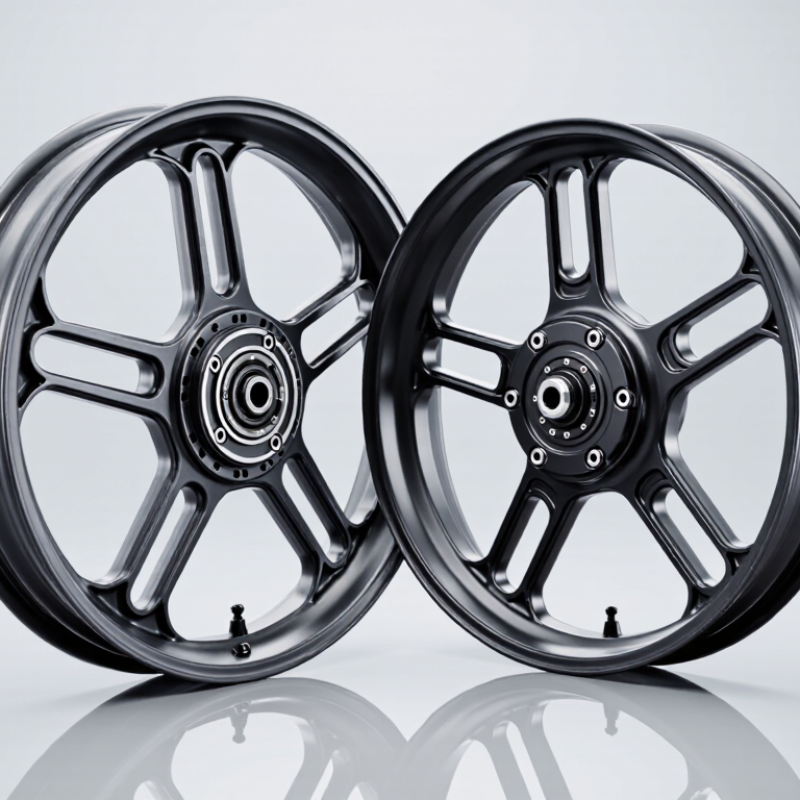
| Wheel fitment and dimensions | Rim diameter and width, offset, hub dimensions, axle interface, brake-disc and sprocket mounting points, and tire compatibility. | Dimensioned drawings, tolerance specifications, and a sample measurement report for the exact wheel configuration. | Compare every critical dimension with the vehicle design or approved drawing. Do not assume that wheels with the same diameter are interchangeable. |
| Load rating and design basis | Rated wheel load, intended vehicle category, operating conditions, and the design assumptions used to determine the rating. | Declared load rating, calculation or engineering documentation, and applicable test reports for the wheel model. | Check the rating against vehicle axle loads and the vehicle manufacturer's requirements. A universal load rating cannot be assumed across wheel sizes or designs. |
| Material and construction | Specified alloy or steel grade, casting, forging or fabrication route, heat treatment where applicable, and construction details. | Material certificates, process specifications, and records linking the material batch to the finished product. | Confirm that the documents identify the actual alloy or material grade and production route, rather than relying on general descriptions such as “aluminum alloy.” |
| Structural testing | Strength and durability tests appropriate to the wheel design, intended vehicle, load, and market requirements. | Test plan and reports identifying the wheel configuration, test conditions, acceptance criteria, equipment, and results. | Verify that testing covers the offered design and relevant use conditions. Test requirements should be agreed with the vehicle customer or applicable regulator; there is no single test result that fits every wheel. |
| Dimensional and runout control | Radial and lateral runout, bead-seat dimensions, mounting-face geometry, and other drawing-defined tolerances. | Inspection records showing measured values, specified tolerances, inspection frequency, and calibrated measuring equipment. | Compare actual measurements with the approved drawing and customer limits. Use the drawing's limits rather than an assumed universal runout threshold. |
| Tire and valve compatibility | Approved tire size and type, tube-type or tubeless design, bead-seat profile, and valve fitment where applicable. | Wheel and tire compatibility documentation, product drawings, and installation instructions. | Confirm compatibility for the specific tire and wheel combination. Do not treat a wheel as tubeless-ready unless its design and documentation support that use. |
| Corrosion and finish durability | Surface treatment or coating, corrosion protection, and finish requirements for the intended service environment. | Coating specifications, process controls, and test reports stating the test method and exposure conditions. | Compare the finish and test conditions with the buyer's environmental and appearance requirements; avoid comparing test-hour claims without matching test methods. |
| Quality management and traceability | Documented inspection controls, nonconformance handling, corrective action, and traceability from material batch to shipment. | Current quality-management certificate, scope and validity details, sample inspection records, and a traceability demonstration. | Check certificate scope and validity independently. A quality-management certification describes a management system; it does not by itself prove that a particular wheel meets its design requirements. |
| Production capacity and consistency | Available processes, monthly capacity for the specified design, production lead time, and controls for changes to tooling or materials. | Process flow, capacity assumptions, sample production records, and a documented engineering-change process. | Assess capacity against the buyer's forecast and confirm that any material, process, or tooling change requires review and approval. |
| Documentation and market compliance | Drawings, specifications, test records, labeling, and any approvals required for the destination market and vehicle application. | A document list tied to the exact model and configuration, plus copies of applicable approvals or declarations where required. | Confirm requirements with the vehicle manufacturer and relevant market authority. Requirements depend on the market and application; do not infer wheel approval from unrelated product certificates. |
| Sampling and supplier verification | Sample approval, production-site verification, inspection access, and handling of rejected or nonconforming products. | Pre-production samples, an agreed inspection plan, facility and process information, and written corrective-action procedures. | Approve samples against the controlled drawing before mass production and agree on inspection and corrective-action requirements in the purchase specification. |