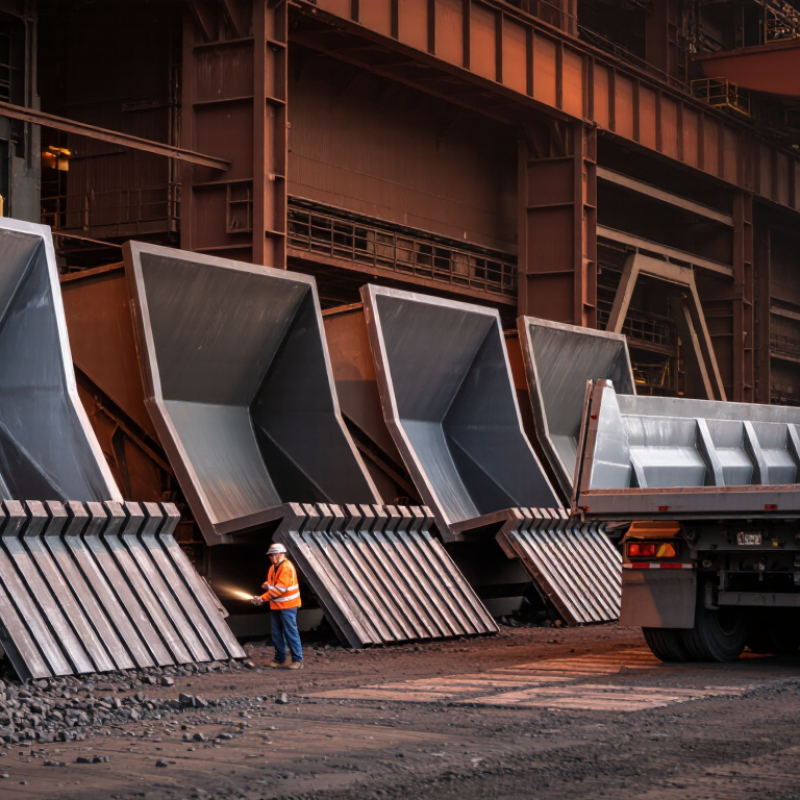
| Flat wear plate | Hopper walls, bin floors, truck bodies, transfer points, and equipment panels. | Sliding abrasion from bulk solids where a relatively flat, replaceable wear surface is practical. | Assess material abrasiveness, impact level, plate thickness, available space, attachment method, and the structural capacity of the supporting surface. | Inspect high-wear zones regularly. Measure remaining thickness at repeatable locations and replace plates before wear reaches the supporting structure or fasteners. |
| Formed or bent liner | Chutes, curved transitions, buckets, and equipment with angled or contoured surfaces. | Applications where a close-fitting shape helps guide material and limit gaps where solids can collect. | Confirm the required bend radius and forming procedure with the plate supplier. Consider plate thickness, design geometry, attachment access, and the direction of material flow. | Check bends, edges, welds, and attachment points for cracking, loosening, or localized wear. Avoid unapproved field heating or forming. |
| Impact liner | Feed chutes, dump zones, crusher inlets, and points where material changes direction or drops onto a surface. | Areas exposed to repeated impact as well as abrasion, particularly where large or heavy material strikes the liner. | Evaluate impact energy, drop height, material size, support behind the plate, and whether a resilient backing or different liner material is needed. | Inspect for dents, cracks, loose fixings, and wear around impact zones. Check the supporting structure because liner damage can hide underlying deformation. |
| Replaceable wear panel | Chute sections, conveyor transfer points, screening equipment, and high-wear areas that need planned replacement. | Equipment where access for changing smaller sections is easier than replacing a large continuous plate. | Plan panel dimensions, lifting and handling, access for removal, joint layout, fastening method, and the risk of material catching at panel edges. | Use a consistent inspection schedule and record wear by panel location. Replace worn panels promptly and check joints and fasteners during each service interval. |
| Wear strip or edge liner | Bucket lips, side edges, scraper contact zones, and narrow surfaces subject to concentrated wear. | Localized abrasion where reinforcing or replacing the full surface would be unnecessary. | Match strip placement to the actual wear pattern. Check edge geometry, attachment access, clearances, and whether the added material affects operation. | Inspect strip ends and attachment points for lifting or cracking. Replace strips before wear exposes the base component or changes its working profile. |
| Perforated or screened wear plate | Screen decks, grizzly sections, and applications that require material to pass through openings while the surface resists wear. | Applications combining screening or drainage with abrasive contact. | Consider opening size and pattern, required open area, material flow, support spacing, impact, and the effect of openings on plate strength. | Check for blocked openings, cracking between openings, and uneven wear. Clean openings safely and inspect supporting members for damage. |
| Selection and upkeep checklist | All liner installations. | Choosing a liner configuration and extending reliable service life. | Identify the wear mechanism, material characteristics, impact conditions, operating temperature, geometry, installation constraints, and acceptable downtime. Select plate grade and thickness using current supplier data and engineering requirements. | Keep inspection records, compare thickness measurements over time, secure fasteners, repair damaged joints, and follow approved cutting, welding, and forming procedures. Use suitable isolation and protective equipment during inspection and repair. |