What Are the Top Heavy Duty Pallet Rack Suppliers in China?
Choosing a pallet rack supplier is not just a price comparison. The right system must fit the goods, equipment, building, and daily handling routine. A loaded pallet can weigh far more than it appears, so beam capacity, upright strength, and connector quality deserve careful review. Details matter.
This guide looks at leading Heavy-Duty Pallet Racks suppliers in China and the factors that help buyers compare them. It considers product range, manufacturing experience, customization, quality checks, communication, and export support. These details can reveal how well a supplier understands demanding warehouse conditions. But supplier claims still need verification. Ask for load tables, material specifications, finish details, and project references relevant to your application. A clear drawing can prevent costly confusion about aisle width, pallet dimensions, or forklift clearance.
Price matters, of course, but it should not be the only measure. A low quotation may exclude installation guidance, protective accessories, or packing requirements. Compare offers item by item, and confirm what each quotation includes. Where possible, assess production capability and inspection procedures before placing an order. Requirements vary by warehouse, and no supplier suits every project. This comparison is a starting point, not a substitute for engineering review. Even a polished catalogue cannot answer every site-specific question. That is worth remembering. By focusing on verifiable information and practical fit, buyers can shortlist Chinese suppliers with greater confidence and make a more informed decision.
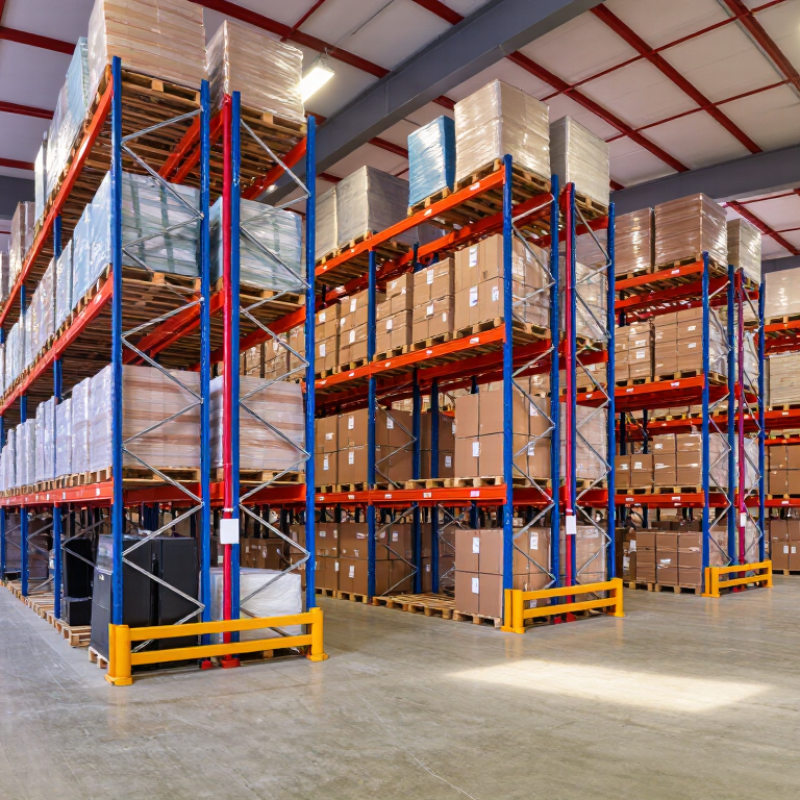
What Heavy-Duty Pallet Racking Systems Are and How They Work
Heavy-duty pallet racking is a steel storage structure designed to hold palletized goods in organized vertical rows. Upright frames carry the load to the floor. Horizontal beams support each pallet, while locking connectors help keep beams seated. Some systems add wire decking, but decking does not replace correct pallet placement or load ratings.
Forklifts place pallets into bays and retrieve them from designated aisles. In selective rack, each pallet is directly accessible; denser drive-in layouts trade access for storage capacity. Capacity depends on beam spacing, frame height, pallet weight, and how loads are distributed. MHI’s 2024 Annual Industry Report found that 55% of surveyed supply-chain professionals planned to increase technology investment. In practice, inventory systems and scanning can help workers match pallets to locations. Still, software cannot correct a poorly configured rack.
Safe operation requires more than strong steel. Installers must anchor frames as specified and follow the manufacturer’s posted load limits. Workers should avoid placing damaged pallets or uneven loads on beams. Inspect regularly. A bent upright or loose connector deserves attention, even when the rack still appears usable. Layout decisions can be imperfect: wider aisles improve forklift access but reduce storage density. Reassess the arrangement when equipment, pallet sizes, or inventory patterns change.
How to Assess Pallet Rack Suppliers in China
Assessing heavy-duty pallet rack suppliers in China starts with the details behind a quotation. Share your pallet dimensions, load weight, forklift type, and warehouse layout. A capable supplier should explain how these factors shape beam spans, upright frames, and aisle clearances. Ask for drawings and load data that match your project, not a generic catalogue page. Check the steel specifications, weld consistency, coating coverage, and whether inspection records are available. Small flaws matter. A rough weld or chipped finish may point to gaps in production control, though appearance alone cannot prove rack strength.
Look beyond the quoted price. Compare what each offer includes, such as guards, anchors, installation guidance, packaging, and spare parts. Request references for projects with similar loads and operating conditions, then verify delivery timelines and after-sales response in writing. A factory visit can help, but a tidy showroom is not the same as consistent output. Ask how defects are recorded and resolved. Some answers may remain vague; note that uncertainty rather than assuming the best. Before placing a large order, review a sample component or a detailed inspection plan, and confirm that the proposed system suits your site and handling equipment.
Leading Heavy-Duty Pallet Rack Suppliers in China
Leading heavy-duty pallet rack suppliers in China are best judged by engineering depth, not catalogue size. China’s total social logistics value reached 352.4 trillion yuan in 2023, up 5.2%, according to the China Federation of Logistics and Purchasing. That growth points to sustained pressure on storage capacity, though it does not prove demand for any one rack design. Buyers should compare load calculations, steel specifications, weld quality, coating thickness, and documented testing. Ask for drawings that match the actual pallet dimensions and forklift clearances. Small gaps matter.
The MHI 2024 Annual Industry Report found that 55% of surveyed supply-chain professionals expected to increase technology investment. For rack procurement, that makes compatibility with scanners, conveyors, and warehouse software worth checking early. Strong suppliers can provide clear installation plans, inspection guidance, and traceable quality records, not just a low quotation. Compare lead times and replacement-part support as carefully as price. Rankings vary by project. A useful comparison can still miss an awkward column, uneven floor, or changing pallet mix; revisit the site assumptions before signing off.
Comparing Supplier Capabilities, Certifications, and Services
China’s heavy-duty pallet rack suppliers should be compared on engineering depth, not price alone. Ask for project-specific load calculations, steel grades, beam connector test data, and clear installation drawings. A catalog rating may not match your actual pallet weight or forklift impact conditions. Small detail. Ask whether the quoted capacity applies to each beam level or the entire bay.
The 2024 MHI Annual Industry Report found that 55% of surveyed organizations planned to invest more than $1 million in supply-chain innovation over the following two years. That investment trend makes compatibility with future automation worth checking, even for conventional racks. Compare suppliers’ experience with shuttle systems, conveyors, and warehouse software integration. Review quality certificates, but verify their scope and validity; an ISO 9001 certificate alone does not prove a rack’s load capacity. Request independent test records and confirm that designs follow recognized rack standards, such as ANSI MH16.1 where applicable. Paper is not proof.
After-sales support matters on busy warehouse floors. Compare spare-part lead times, inspection guidance, warranty terms, and response procedures for damaged uprights. Ask who supervises installation and how workers receive practical handover instructions. A neat factory audit helps, but it cannot replace checks on the delivered batch. I would also inspect sample welds and coating thickness myself; that step is easy to overlook when schedules tighten.
How to Select a Supplier for Your Warehouse Needs
A reliable heavy-duty pallet rack supplier should ask about pallet weight, dimensions, forklift type, and daily traffic before recommending a layout. Share clear warehouse measurements, including ceiling height, column locations, and sprinkler clearance. Guesswork can lead to wasted aisle space or racks that do not fit your operations.
Ask for engineering drawings, stated load capacities, material specifications, and details of quality checks. The beam rating should match the loads you plan to store, not just your current average. Request photos or records from comparable installations, and check whether the supplier can explain its design assumptions clearly. Good answers are specific. Vague promises are not enough.
Compare the full quotation, including packaging, shipping, installation guidance, spare parts, and warranty terms. A low unit price may exclude details that matter later. Ask how damaged components are handled and how quickly replacement parts can be supplied. Communication matters, too: test response times with a practical question about a beam connection or floor condition. No checklist catches everything. Recheck the final drawings against the site before production; even careful teams can miss a column or an awkward turning point.
A Material Check for Heavy-Duty Pallet Rack Suppliers
Minimum yield strength specified for Q235B and Q355B steel at thicknesses up to 16 mm. Use mill certificates to verify the actual steel grade and thickness offered; pallet rack components may use different materials and specifications.
References: GB/T 700-2006 for Q235B and GB/T 1591-2018 for Q355B. Values shown apply to steel thicknesses up to 16 mm; confirm the applicable standard and product documentation with each supplier.
