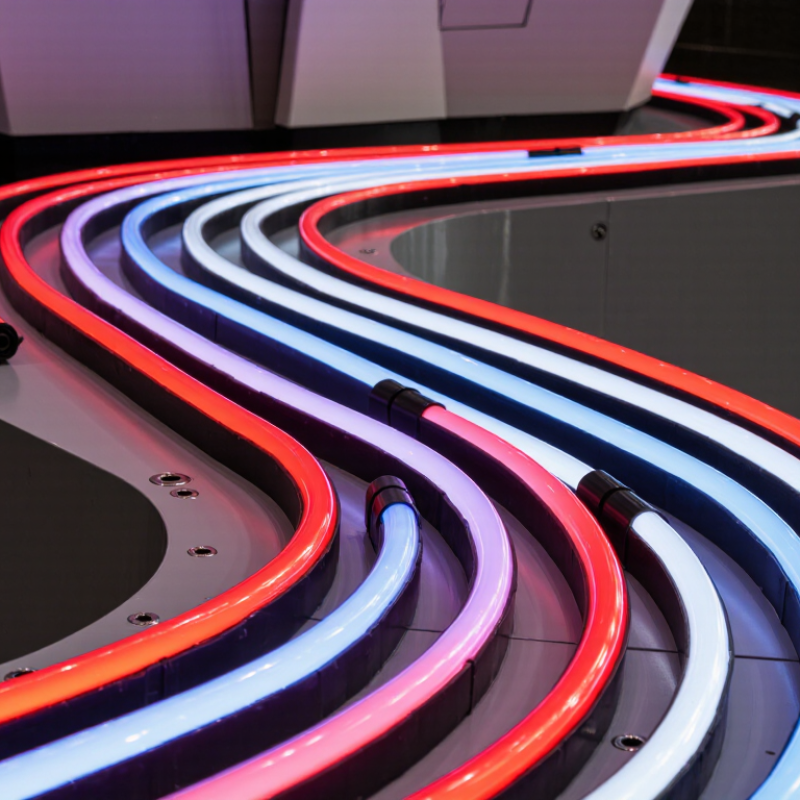
For global buyers comparing LED neon flex suppliers, IP67 is a test classification, not a promise of waterproof performance in every installation. IEC 60529, the enclosure protection standard, defines the first digit, 6, as dust-tight protection. The second digit, 7, covers temporary immersion under specified test conditions. A common IPX7 test uses immersion at 1 metre for 30 minutes, with setup details depending on the enclosure. That distinction matters.
Ask suppliers for test evidence covering the complete finished flex assembly, not only the LED strip or outer jacket. Check whether the sample included end caps, cable entries, connectors, and sealed cut points. IEC 60529 does not make IP67 equivalent to protection against water jets or permanent submersion. Different exposures require different checks. A neat rating label can still leave gaps.
Installation details matter, too. Tight bends, damaged jackets, or poorly sealed field joints can undermine protection. Request the test report, product dimensions, and written installation limits, then compare them with the intended site conditions. Look closely at corners and cable exits. I would also ask how replacement sections are resealed; supplier documents do not always explain that part clearly. A small omission can become a real maintenance problem.