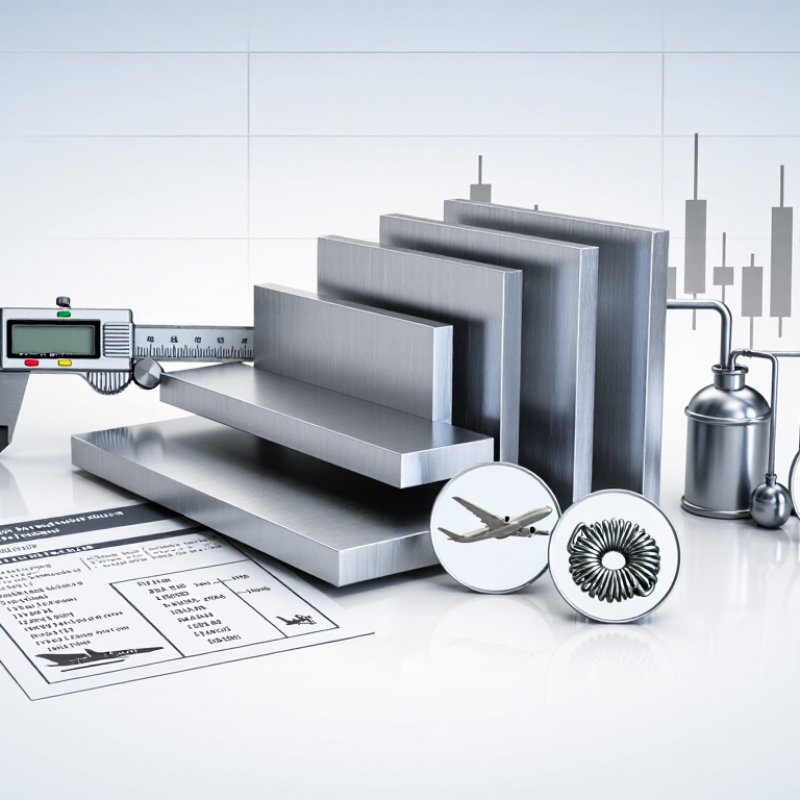
Buyers comparing niobium plate suppliers should begin with grade, not price. ASTM B393 covers niobium and niobium-alloy plate, sheet, and strip. Ask for the exact UNS designation, chemical limits, tensile properties, and heat-treatment condition. Common comparisons include commercially pure niobium and zirconium-containing grades. They are not interchangeable in high-temperature or corrosive service. Small chemistry differences can affect forming behavior.
Size details matter just as much. Record thickness, width, length, flatness, edge condition, and dimensional tolerances. A 2 mm plate cut to 1,000 × 2,000 mm needs a different quotation from a precision-machined blank. Surface finish and grain direction also deserve attention. Request mill test reports, traceability, and independent inspection when the application is critical. Missing paperwork is a warning sign.
Price signals need careful interpretation. The USGS Mineral Commodity Summaries 2024 and World Mining Data 2024 identify Brazil as the dominant source of mined niobium. However, those reports mainly describe upstream supply, not finished plate prices. Supplier quotes also reflect conversion yield, machining, minimum order quantity, certification, freight, and delivery time. Compare prices per usable kilogram, not merely per quoted kilogram. A low offer may hide high scrap or loose tolerances. I would also request two sample quotations with identical specifications. Otherwise, the comparison remains imperfect.