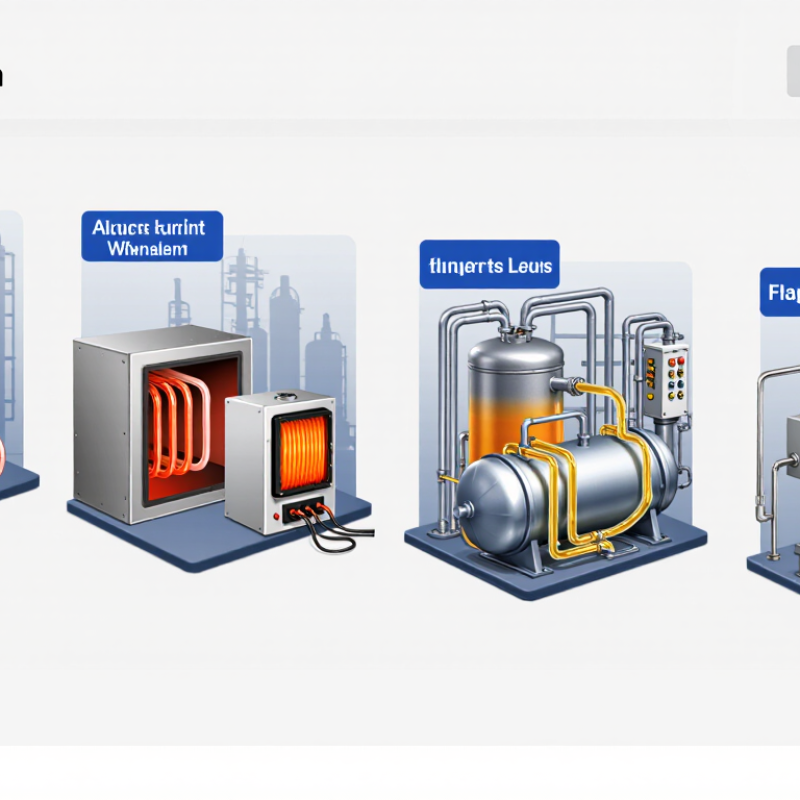
| Electric Resistance Heater | Electric current heats elements that transfer heat to a liquid, gas, or solid surface. | Tank and vessel heating, air and gas heating, plastics processing, and temperature maintenance. | Precise temperature control, clean operation at the point of use, and straightforward integration with automated controls. | Electrical supply capacity and energy costs matter; element selection must suit the fluid, temperature, and operating conditions. |
| Direct-Fired Process Heater | Fuel combustion transfers heat to process fluid flowing through tubes inside a fired enclosure. | Refining, petrochemical processing, and other duties requiring high process-fluid temperatures or substantial heat input. | Can provide high heat output and is well established for large-scale continuous process duties. | Requires combustion controls, emissions management, burner maintenance, and safeguards against tube overheating. |
| Thermal Fluid Heater | A heater warms circulating heat-transfer oil or another thermal fluid, which then supplies heat to process equipment. | Indirect heating of reactors, dryers, presses, tanks, and production lines that need circulating heat. | Provides a closed-loop heat source and can distribute heat to multiple users without using process steam. | Fluid condition, circulation, expansion capacity, leak prevention, and maximum fluid temperature require attention. |
| Steam Heater | Steam condenses in a coil, jacket, or exchanger and releases latent heat to the process material. | Batch vessels, heat exchangers, food processing, chemical production, and building or plant process services. | Offers effective heat transfer and can use an existing steam-generation and distribution system. | Condensate drainage, pressure control, water treatment, and steam availability affect reliable operation. |
| Infrared Heater | Infrared radiation transfers energy directly to exposed surfaces without first heating the surrounding air. | Coating and paint curing, drying, web processing, and heating of accessible surfaces. | Can heat targeted areas quickly and reduce the need to warm a large volume of air. | Performance depends on material absorption, emitter-to-product spacing, line of sight, and uniform exposure. |
| Induction Heater | An alternating magnetic field induces electrical currents in electrically conductive workpieces, generating heat within them. | Metal heating, forging, heat treatment, brazing, and selected process applications involving conductive materials. | Enables rapid, localized heating and can provide repeatable control without direct contact with the workpiece. | Requires a suitable conductive load; coil design, workpiece geometry, and power-system requirements influence results. |