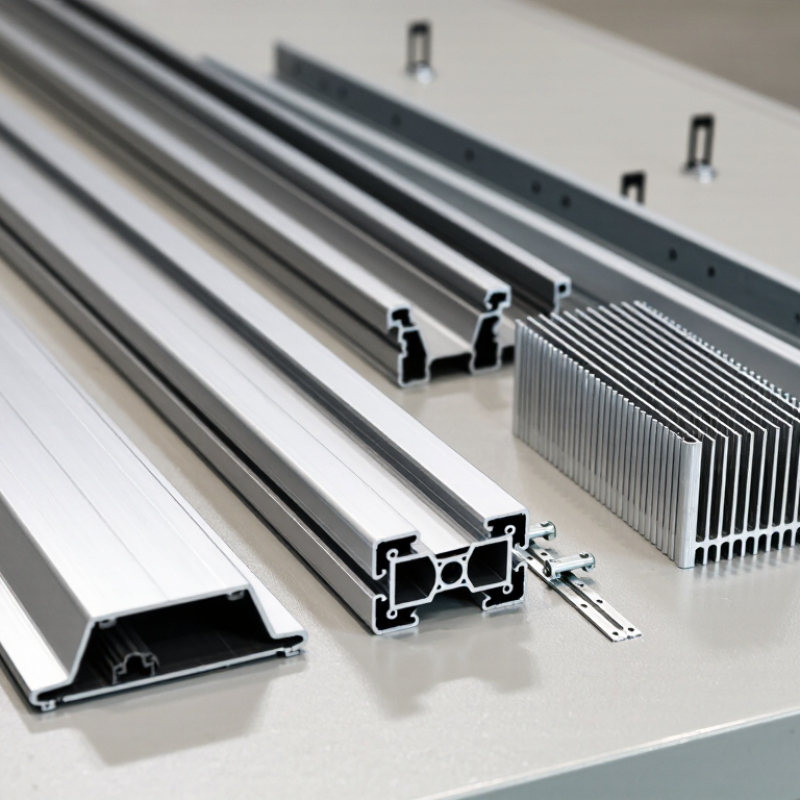
| T-slot modular profile | Commonly 6063-series aluminium; temper and strength depend on the supplier and profile design. | Machine frames, workstations, guards, test rigs, and adjustable fixtures. | Slot-based connections allow components to be repositioned or added without extensive machining. | Check slot dimensions, connector compatibility, load direction, span, deflection, and joint stiffness. | The structure may need frequent adjustment, assembly, or later expansion. |
| Architectural profile | Often 6063-series alloys, selected for extrusion detail and surface finishing. | Window and door frames, curtain-wall components, trims, and interior partitions. | Can combine complex cross-sections with anodized or coated finishes and a clean appearance. | Evaluate the complete system for weather sealing, drainage, thermal performance, corrosion exposure, and applicable building requirements. | Appearance, finish options, and integration with glazing or building components are important. |
| Structural or heavy-duty profile | Often 6061-series alloys for strength-oriented applications; exact properties depend on temper and section design. | Machine supports, brackets, frames, platforms, and load-bearing components. | Can provide a strong, relatively lightweight structural member and may be machined or joined as required. | Confirm alloy and temper, section properties, connection design, fatigue demands, and engineering loads; do not infer capacity from appearance alone. | Strength and stiffness calculations are central to the design. |
| Heat-sink profile | Commonly 6063-series aluminium; alloy, fin geometry, and manufacturing method affect thermal performance. | LED lighting, power electronics, control equipment, and other thermal-management assemblies. | Fins increase exposed surface area, while aluminium conducts heat and is relatively light. | Assess heat load, airflow, mounting orientation, contact resistance, fin spacing, and operating temperature. | Passive heat dissipation is needed and the available space can accommodate the required surface area. |
| Solar mounting profile | Commonly extruded aluminium alloys used for mounting rails and clamps; alloy, temper, and finish vary by system. | Photovoltaic module rails, roof attachments, and ground-mount structures. | Light weight and corrosion resistance can simplify handling and support outdoor use. | Check wind and snow loads, span, roof or ground attachment, galvanic compatibility, drainage, and local structural requirements. | A lightweight, corrosion-resistant mounting member is needed for an exposed installation. |
| Enclosure and panel profile | Often 6063-series aluminium; other alloys may be specified according to strength, machining, or fabrication needs. | Equipment housings, instrument panels, cabinet frames, covers, and electronic enclosures. | Can integrate grooves, mounting features, and panel-retaining details into one extruded section. | Specify panel thickness, sealing method, access needs, ventilation, electromagnetic shielding requirements, and finish. | Equipment needs a durable housing with integrated mounting or panel features. |
| Custom-engineered extrusion | Alloy and temper selected to suit strength, corrosion, formability, finish, and extrusion constraints. | Purpose-built parts for transport, machinery, consumer products, and industrial assemblies. | Cross-section can be tailored to combine several functions and reduce part count or secondary assembly. | Review minimum wall thickness, uniformity, tolerances, die feasibility, production volume, finishing, and tooling cost with the extruder. | Standard sections cannot meet the geometry or functional requirements efficiently. |