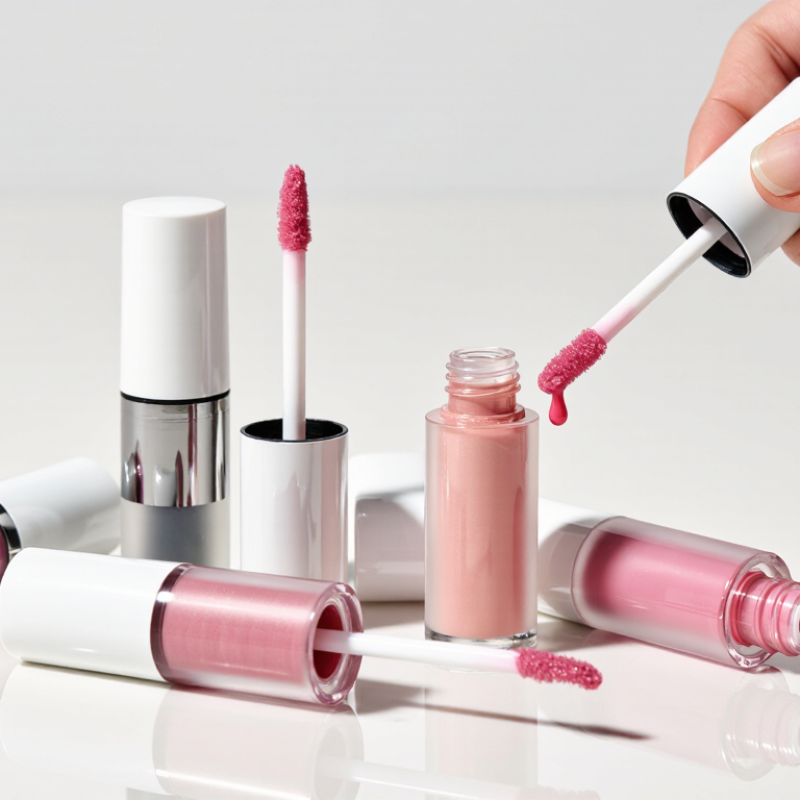
| What the package is | A flexible tube that dispenses lip gloss when gently squeezed. It commonly has a narrow dispensing opening or an attached applicator. | Suitable for portable, controlled application. The tube can be used on its own or as part of a secondary carton. |
| Typical product formats | Clear, tinted, shimmer, or moisturizing glosses, depending on the formula. | Formula viscosity and any suspended particles should be considered when selecting the opening and applicator. |
| Common tube materials | Flexible plastic, often polyethylene-based; multilayer constructions may also be used. | Material choice affects flexibility, appearance, barrier performance, decoration options, and recyclability. Confirm the exact structure with the packaging supplier. |
| Typical capacity | Small, travel-friendly formats are common. Capacity varies by product and package design; approximately 5–15 mL is a practical range for many lip gloss tubes. | Choose a fill volume that suits the intended use, product dosage, tube dimensions, and applicable labeling requirements. |
| Dispensing options | Options include a simple nozzle, a slanted tip, or a tube paired with a separate wand or applicator. | A narrow opening can help control the amount dispensed. Applicator shape should suit the formula and the desired application experience. |
| Closures and leakage control | Screw caps are common; some designs include a plug, reducer, or other seal at the dispensing opening. | Check closure fit and package integrity through leak, handling, and transport testing. The formula should not seep around the cap or dispensing tip. |
| Formula compatibility | Compatibility depends on the gloss ingredients, tube material, applicator, and closure components. | Conduct stability and compatibility testing to look for changes such as leakage, swelling, cracking, odor transfer, discoloration, or changes in formula performance. |
| Decoration and labeling | Common options include printed graphics, labels, and decorative finishes, depending on the tube construction. | Keep required product information legible on the tube or its accompanying packaging. Check print adhesion and appearance after handling and exposure to the product. |
| Consumer use and hygiene | The tube is generally intended for individual use and direct application or use with a designated applicator. | Design the opening to dispense cleanly and avoid unnecessary contact between the product and hands or other surfaces. |
| Storage and transport | Flexible tubes are lightweight and convenient to carry, but can be squeezed in a bag or during shipping. | Evaluate cap security, tube resilience, and leak resistance under expected storage and transport conditions. Provide suitable storage guidance where needed. |
| Sustainability considerations | Material combinations, labels, closures, and applicator parts can affect how readily a package can be sorted or recycled. | Review the complete package structure against local recycling guidance. Avoid making recyclability claims unless they are supported for the intended market and package design. |