How to Use Cellulose Ether Additives in Your Products?
In the world of product formulation, the use of Cellulose Ether Additives has gained significant traction. These additives enhance the texture, stability, and performance of various products, from paints to food items. However, utilizing them effectively requires a deep understanding of their properties and behaviors.
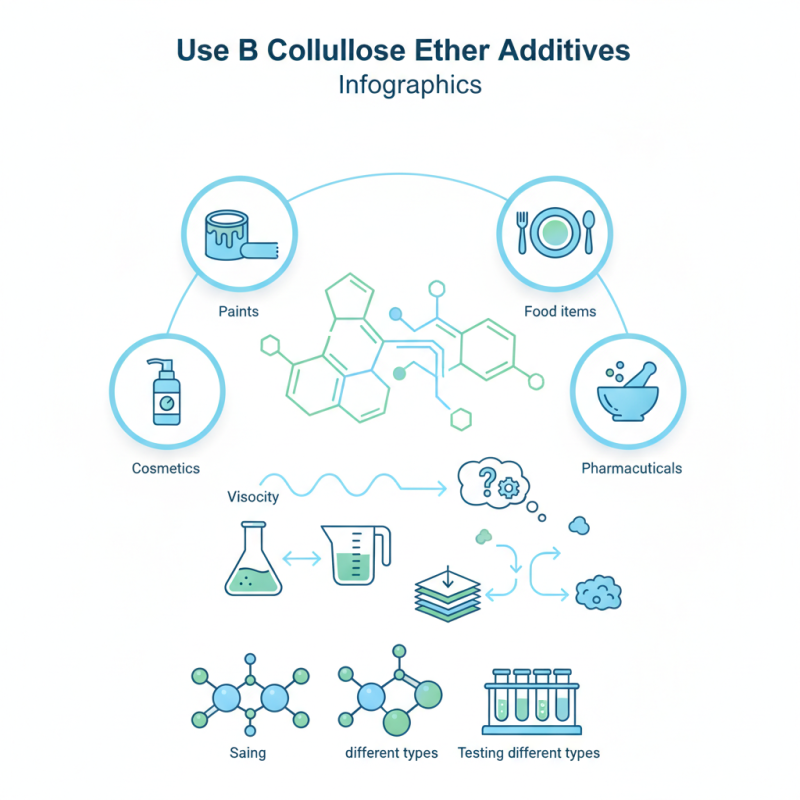
When incorporating Cellulose Ether Additives, one must consider their unique characteristics. For instance, their viscosity can alter the flow of liquids. This is crucial in industries like cosmetics and pharmaceuticals. Yet, achieving the desired consistency can be challenging. Sometimes, formulations may not turn out as expected, leaving room for reflection and adjustment.
It's important to note that not all cellulose ethers perform identically. Choices need careful thought. Testing different types ensures the best results. Creating products that truly meet consumer needs can be complicated. But with a thoughtful approach to using Cellulose Ether Additives, manufacturers can achieve more reliable and effective formulations.
Understanding Cellulose Ethers: Definition and Types
Cellulose ethers are essential additives in many products. They are derived from cellulose, which is a natural polymer found in plant cell walls. There are several types of cellulose ethers such as hydroxypropyl methylcellulose (HPMC) and carboxymethyl cellulose (CMC). Each type has unique properties.
HPMC is widely used in coatings and adhesives. It provides excellent water retention and improves texture. CMC, on the other hand, is often found in food products. It acts as a thickener and stabilizer, enhancing mouthfeel. Understanding these types helps in selecting the right one for your needs.
**Tip:** Start with small quantities when adding cellulose ethers to your formulation. This allows you to gauge their effects on texture and stability without overwhelming the product.
The application of cellulose ethers can be tricky. Adjusting the concentration may lead to unexpected results. Sometimes, a thickened product might become too sticky or lose its desired flow. Being aware of this can assist in making better decisions during formulation.
**Tip:** Test your formulation in small batches. This way, you can refine your recipe before scaling up production.
Benefits of Using Cellulose Ether Additives in Products
Cellulose ether additives provide numerous benefits across various industries. According to recent market reports, the global cellulose ether market is expected to reach $5 billion by 2025. This growth is driven by the increasing demand for eco-friendly and sustainable products. As consumers become more environment-conscious, manufacturers need to adapt.
These additives enhance texture and consistency in products. In personal care, cellulose ethers improve the feel and application of creams and lotions. In construction, they help improve the workability of mortars and adhesives. The water retention properties of cellulose ethers lead to better performance characteristics. However, achieving the right balance can be tricky and may require experimentation.
Some manufacturers report challenges in product formulation. Not every cellulose ether works the same for each application. Sometimes, these additives can create unexpected viscosity changes. It's important to closely monitor performance during testing phases. Obtaining feedback from end-users may provide insights into necessary adjustments. Balancing functionality and consumer expectations can be a complex task, but the rewards often justify the effort.
Benefits of Using Cellulose Ether Additives in Products
Guidelines for Incorporating Cellulose Ethers into Formulations
Incorporating cellulose ethers into formulations offers numerous benefits, enhancing texture and stability. Cellulose ethers, such as hydroxypropyl methylcellulose (HPMC), are widely used in various industries. They improve viscosity and provide excellent water retention. According to industry reports, products containing cellulose ethers can show up to 30% improvement in stability compared to those without.
When using cellulose ethers, consider the desired viscosity and gel strength. Different types of cellulose ethers offer varying properties. For example, a higher degree of substitution results in increased solubility. Test small batches to find the optimal blend for your needs. Adjust the concentration based on desired viscosity. Maintaining an appropriate pH level is also crucial. Ethers can behave differently under varying pH conditions.
Tips: Always conduct thorough testing with your specific formulation. Mixing techniques can impact the final product. Consider the impact of temperature on viscosity. Remember that while cellulose ethers can enhance effectiveness, they should not be overused. Excessive amounts can lead to an undesirable texture. Take time to review and refine your formulations regularly. This approach can lead to improvements over time.
Testing and Quality Control for Cellulose Ether Applications
Testing cellulose ether additives is crucial. Different formulations can yield varying results. A small change can impact viscosity, texture, or stability. Regular testing ensures consistency. Consider using various methods like rheology or sensory evaluation. Each method offers unique insights.
Quality control starts with raw materials. They must meet specific standards. Contamination can lead to poor product quality. It’s essential to maintain a clean production environment. Unexpected results can arise from minor lapses. Always double-check ingredients for purity.
Unexpected variations may occur during processing. Temperature and mixing speed can influence outcomes. Documenting these conditions helps identify issues. Reflecting on past tests can provide valuable lessons. Continuous improvement is key in refining cellulose ether applications. Each test brings us closer to the desired quality.
Common Applications of Cellulose Ethers in Various Industries
Cellulose ether additives are versatile materials used across various industries. In the construction sector, they enhance the consistency of cement and mortar. Adding cellulose ethers improves workability and reduces water usage. This leads to better adhesion and durability of construction materials.
In the food industry, cellulose ethers serve multiple purposes. They act as thickeners and stabilizers in sauces, dressings, and dairy products. These additives help maintain texture and prevent separation. However, achieving the right balance can be challenging. Too much can alter the flavor and mouthfeel of the product.
Pharmaceutical applications are also notable. Cellulose ethers are used in tablet formulations and as binders. They help ensure even distribution of active ingredients. However, adjusting the viscosity or solubility can be tricky. A miscalculation may lead to ineffective dosages or poor product performance. Understanding these nuances is key to successful applications.