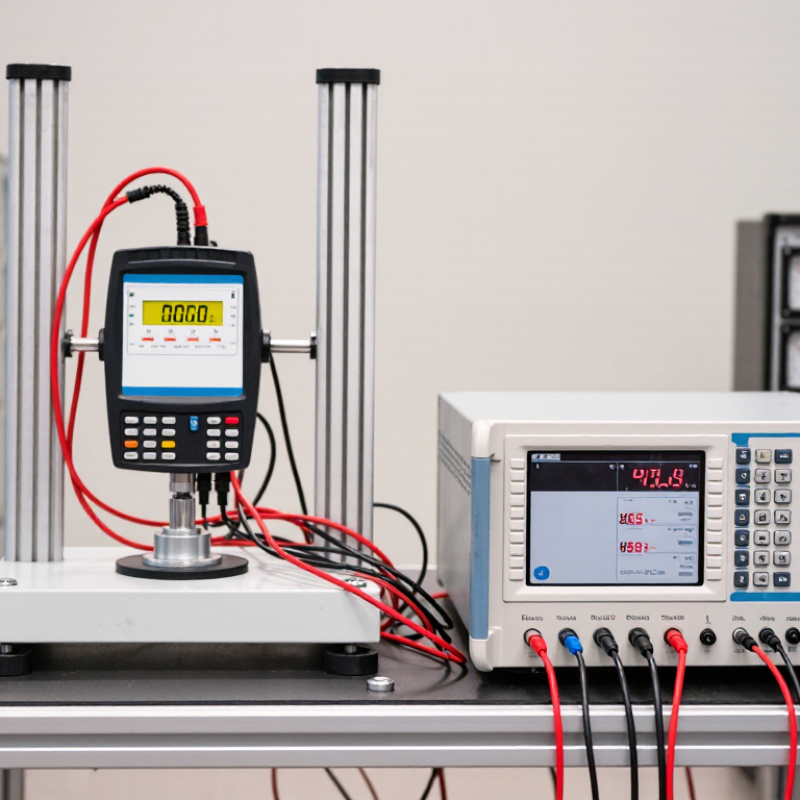
| Electric energy meter | Accuracy and load-point test | The meter’s recorded energy is compared with energy calculated from calibrated voltage, current, phase angle, and test duration. | Apply controlled electrical loads at selected current and power-factor conditions; compare the meter register or pulse output with a reference standard. | Check multiple load levels, phase sequence, wiring, and power factor. Use a stable, traceable reference. |
| Water meter | Volumetric or gravimetric accuracy test | The indicated volume is compared with a reference volume, or with the collected water’s mass converted to volume using water density at the test temperature. | Pass a measured quantity of water through the meter at controlled flow rates, then compare the meter reading with a calibrated tank or weighing system. | Control flow stability, air removal, water temperature, and leakage. Test points should cover the meter’s intended operating range. |
| Gas meter | Prover comparison test | The meter’s registered gas volume is compared with a known reference volume delivered by a calibrated prover. | Run gas through the meter and prover at controlled flow rates; compare their volume readings, applying relevant pressure and temperature corrections when required. | Check for leaks and pulsation, and account for gas pressure, temperature, and test-gas conditions. |
| Liquid flow meter | Reference-meter or gravimetric comparison | The test meter’s flow or accumulated quantity is compared with a calibrated reference meter or with collected mass converted to volume. | Operate the test and reference meters in a stable flow loop, or collect and weigh the fluid over a measured interval. | Allow flow to stabilize; consider fluid properties, temperature, installation effects, and the reference instrument’s uncertainty. |
| Heat meter | Component and energy-calculation test | Thermal energy is calculated from the measured fluid flow and the temperature difference between supply and return, using the fluid’s thermal properties. | Check the flow sensor and temperature sensors against references, then verify that the calculator produces the expected energy from known inputs. | Verify sensor pairing, installation orientation, temperature-sensor placement, and correct fluid settings. |
| Pressure gauge | Pressure comparison and hysteresis test | The gauge indication is compared with a calibrated pressure reference at increasing and decreasing pressure points. | Apply pressure using a suitable pressure source and reference instrument; record readings across the range in both directions. | Check zero return, repeatability, hysteresis, leaks, and whether the reference and gauge use the same pressure basis. |