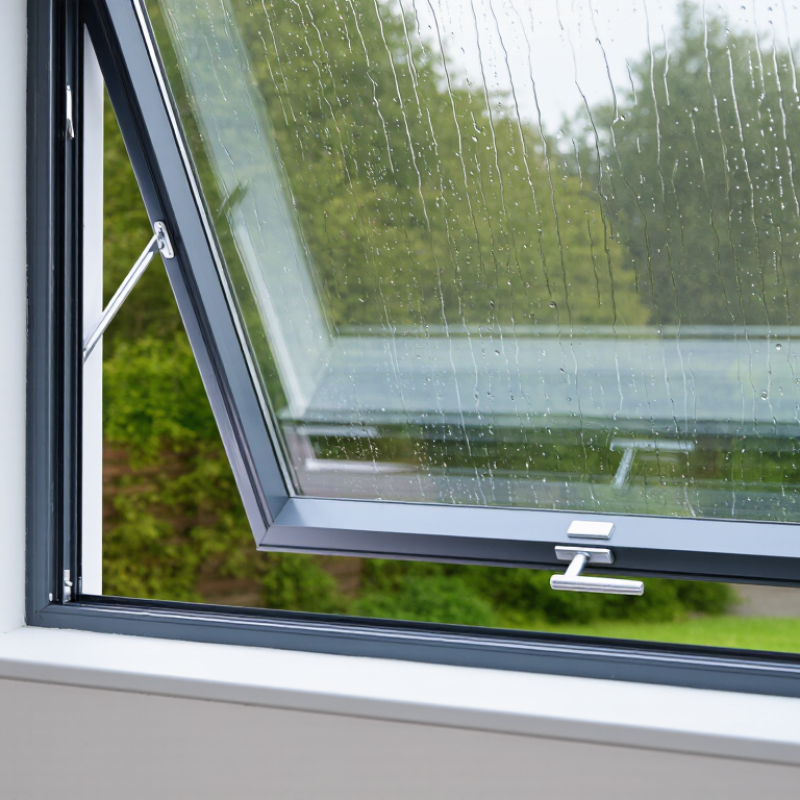
| Outer frame | Usually made from hollow or multi-chamber extruded aluminum profiles. | Anchors the window to the building opening and supports the sash. Frame depth and profile design vary by system and glazing requirements. |
| Thermal break | In thermally broken frames, an insulating strip—commonly polyamide—separates the interior and exterior aluminum sections. | Reduces heat transfer through the frame. Some aluminum window systems do not include a thermal break. |
| Casement sash | A hinged frame, typically assembled from aluminum profiles, that holds the glazing and opens outward or inward. | The sash movement and opening direction depend on the hardware and installation design. |
| Glazing and glazing beads | Glass may be single, double, or triple glazed. Beads and setting blocks help secure and position the glass within the sash. | Glazing type affects thermal performance, sound reduction, safety, and overall sash weight. Specifications depend on the project and local requirements. |
| Hinges and operating hardware | Hinges support the sash; an operating handle and, in many designs, a linkage or friction stay control opening and positioning. | Hardware must be suited to sash size and weight. Opening clearance and access for maintenance should also be considered. |
| Locking points | A handle may operate a single latch or a multipoint locking mechanism that engages at more than one position along the sash. | The locking arrangement helps draw the sash against the seals. Security performance depends on the complete window design and its installation. |
| Gaskets and weather seals | Flexible seals, often made from elastomeric materials, are fitted between the sash, frame, and glazing. | Help limit air and water infiltration when correctly designed, compressed, and maintained. |
| Drainage and weep paths | Many frame systems include internal channels and exterior drainage openings. | Provide a route for incidental water to drain to the exterior. Openings should remain clear, and installation details must not obstruct drainage. |
| Finish and surface protection | Common finishes include powder coating and anodizing; the available finish depends on the product specification. | Protects and colors the aluminum surface. Cleaning and care instructions vary by finish and environment. |