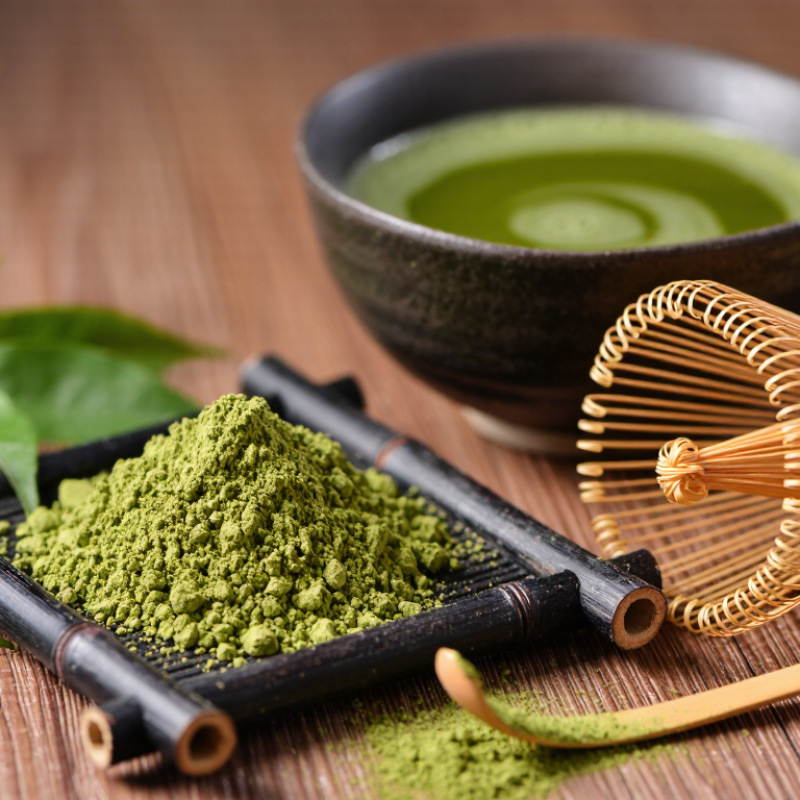
| What “pure matcha” means | Matcha is a finely powdered tea made from specially cultivated and processed green tea leaves, traditionally called tencha before grinding. Pure matcha contains tea powder rather than added sweeteners, milk powder, or flavorings. | Checking the ingredient list helps distinguish plain matcha from sweetened or blended matcha-style products. |
| Tea plant | Matcha is made from leaves of the tea plant, Camellia sinensis. Cultivars, growing conditions, and harvest timing can vary. | These factors can influence the powder’s color, aroma, taste, and composition. |
| Shade cultivation | In many traditional production methods, tea bushes are shaded for roughly three to four weeks before harvest. The degree and duration of shading vary by producer and tea style. | Reduced sunlight changes leaf growth and chemistry, often contributing to a greener color and a more pronounced savory character. |
| Harvesting | Leaves are picked, often with an emphasis on young, tender growth for higher-grade matcha. Harvest methods and leaf selection differ across regions and products. | Leaf maturity and condition affect flavor and the amount of sorting required later. |
| Steaming | Freshly harvested leaves are commonly steamed to limit oxidation and preserve their green character. | This step helps maintain the fresh color and vegetal qualities associated with green tea. |
| Drying and tencha production | After steaming, leaves are dried without the rolling step used for many other Japanese green teas. The dried leaf material is known as tencha. | Tencha is the traditional raw material for matcha; it is not the same as ordinary rolled green tea leaves. |
| Sorting and de-stemming | Stems, veins, and other unwanted material are removed from the dried leaves before grinding. | Careful sorting helps create a finer powder and a smoother, more consistent texture. |
| Grinding | Tencha is ground into a fine powder. Traditional stone mills are used for some matcha, while other grinding equipment may also be used. | Fine, even particles disperse more readily in water. Grinding method and speed can affect production time and heat exposure. |
| Appearance and flavor | Matcha is typically a fine green powder. Its taste can range from mild and sweet-leaning to more robust, vegetal, or bitter, depending on the leaf and processing. | Color alone does not establish quality; aroma, freshness, texture, and taste are also useful considerations. |
| Storage after opening | Keep matcha tightly sealed in a cool, dry, dark place and follow the package instructions. Limit exposure to air, moisture, heat, and light. | Good storage helps slow losses in color and aroma. Refrigeration may be suitable when condensation is prevented. |