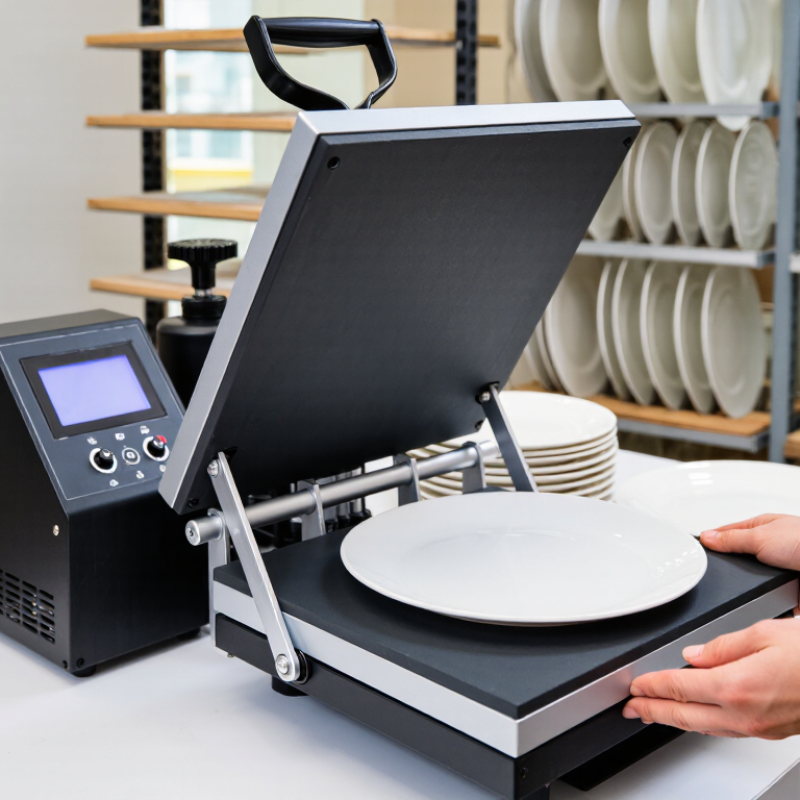
| Personalized gifts and small custom orders | Single-station press with interchangeable plate-shaped platens | Choose a platen that matches the plate sizes and shapes you expect to sell most often. | A plate-specific platen helps apply heat and pressure across the intended print area. |
| Products in several plate sizes | Compatible interchangeable platens or a suitable range of press sizes | Check the platen’s supported diameter and shape against each blank plate before purchasing. | A plate that does not fit the platen correctly may receive uneven pressure or incomplete contact. |
| Frequent setup changes | Accessible controls and straightforward platen-change procedure | Ask how platens are changed and whether the required accessories are included or sold separately. | Efficient changeovers can reduce setup interruptions when switching between products. |
| Repeat production runs | Adjustable temperature and timer, with clearly readable controls | Confirm the machine’s operating range and use the settings recommended for the transfer material and plate blank. | Repeatable settings support consistent production; suitable settings depend on the materials being used. |
| Limited workspace | Compact footprint and a handle or opening mechanism suited to the work area | Measure the press, its open position, and the space needed to load and unload plates. | Allowing adequate clearance makes operation and handling safer and more convenient. |
| New or occasional operators | Clear instructions, stable construction, and accessible safety features | Review the operating manual, safety guidance, warranty terms, and availability of replacement parts. | Training and maintenance support help operators use the press correctly over time. |
| Growing order volume | Durable construction and a workflow suited to the expected production schedule | Compare the manufacturer’s stated duty guidance and consider whether a second station would reduce bottlenecks. | Actual output depends on loading, alignment, transfer settings, cooling, and operator workflow—not just the press itself. |
| Choosing between press types | Plate-specific press versus a general flat heat press | Choose a plate-specific model when its curved or shaped platen is designed for the plate blanks you use. | Plate presses are designed for plate transfers; a flat press may not provide suitable contact on a curved plate surface. |
| Note: Specifications and compatible plate sizes vary by model. Verify platen compatibility and follow the instructions for the press, transfer paper, ink, and blank plate. |