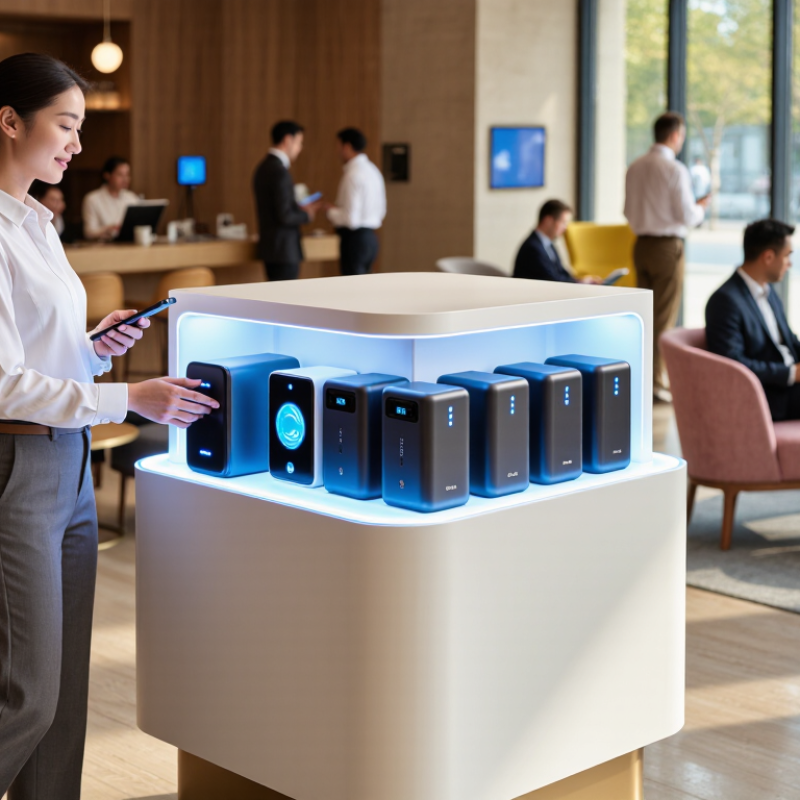
| Initial pilot scope | Start with 3–10 stations in locations that have steady visitor traffic and visible waiting areas. | A limited pilot reduces installation risk and creates enough usage data for pricing and placement decisions. | Review usage, returns, support requests, and revenue weekly before expanding. |
| Station capacity | Select units according to demand; compact stations commonly hold about 6–12 removable power banks, while larger units can hold more. | Capacity affects availability, floor space, replenishment frequency, and upfront investment. | Use larger capacity in transport, hospitality, and entertainment venues; use compact units in smaller retail spaces. |
| Power-bank battery size | A common consumer range is approximately 5,000–10,000 mAh, subject to local safety and transport requirements. | Higher capacity can support longer use, but it generally increases product weight, charging time, and replacement cost. | Choose capacity based on customer dwell time, device mix, and portability expectations. |
| Charging connectors | Support the connector types most commonly used by customers, typically USB-C plus other locally relevant connectors. | Connector compatibility directly affects successful rentals and customer satisfaction. | Track failed charging attempts and replace damaged or outdated cables promptly. |
| Recommended placement | Place stations near entrances, reception desks, checkout areas, food courts, seating zones, or transport waiting points. | High visibility and customer dwell time improve discovery and rental conversion. | Avoid obstructing exits, fire equipment, accessible routes, or emergency paths. |
| Rental duration | Offer a short-term rental model with pricing by time, day, or a combination of both. | Flexible duration accommodates quick top-ups as well as longer visits. | Use a clear maximum-charge policy and communicate late-return or loss fees before checkout. |
| Payment process | Provide a mobile-friendly checkout supporting widely used digital payment methods and clear receipts. | A fast payment flow reduces abandoned rentals and support requests. | Test payment, deposit, refund, and receipt workflows before public launch. |
| Availability target | Set an internal target of at least 95% station online availability during operating hours. | Frequent outages reduce trust and create lost rental opportunities. | Monitor connectivity, power supply, payment status, and slot failures remotely where possible. |
| Inventory availability | Maintain enough charged units for peak periods and keep several empty return slots available. | A full station cannot accept returns, while an empty station cannot satisfy new demand. | Set low-stock and full-capacity alerts and schedule replenishment based on hourly demand. |
| Maintenance cycle | Inspect stations and power banks at least weekly during the pilot; increase frequency at high-volume locations. | Regular inspection identifies damaged cables, dirty ports, charging faults, and missing units. | Use a checklist covering physical condition, charging performance, labels, and connectivity. |
| Customer support | Display a support contact, rental instructions, return guidance, and refund rules at every station. | Clear instructions reduce confusion and shorten resolution time for payment or return issues. | Log every complaint by station, issue type, response time, and final outcome. |
| Core performance metrics | Track rentals per station per day, utilization rate, average rental duration, return rate, revenue, and maintenance cost. | These measures show whether demand, pricing, placement, and operating costs are sustainable. | Compare results by location and time period rather than relying only on total rentals. |
| Break-even review | Calculate break-even using installation cost, hardware cost, payment fees, revenue share, maintenance, losses, and support labor. | Gross rental revenue alone does not show whether a station is profitable. | Review contribution margin monthly and relocate or redesign underperforming stations. |
| Safety and compliance | Use certified electrical equipment, suitable chargers, battery protection, and site-specific fire and electrical procedures. | Lithium-ion batteries and mains-powered equipment require controlled handling and appropriate local compliance. | Document inspections, incident procedures, disposal processes, and staff training requirements. |