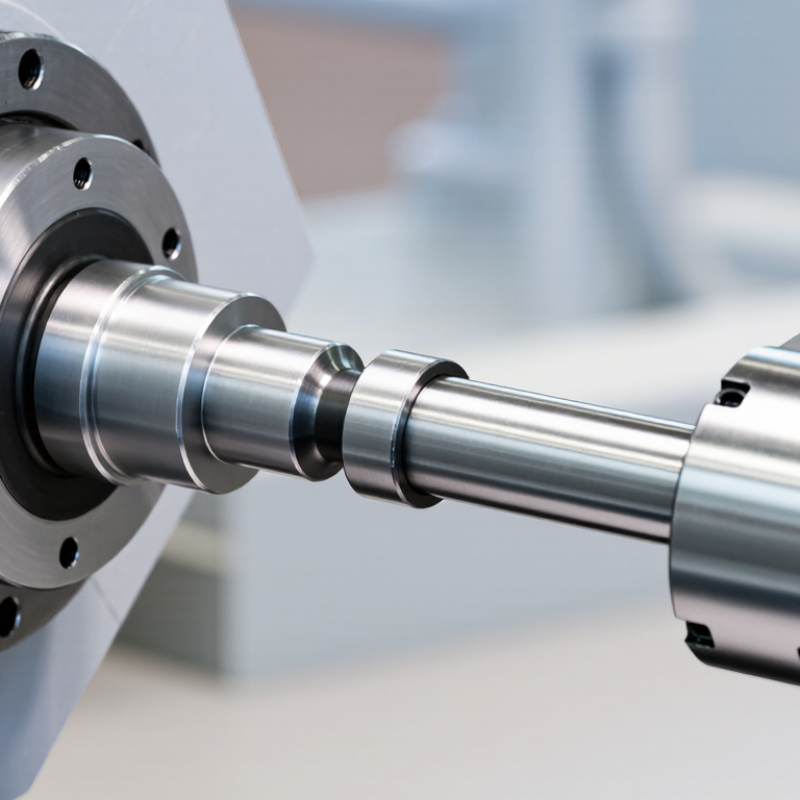
| Definition | A sliding drive shaft is a shaft assembly designed to transmit rotary torque while allowing its effective length to change. Axial movement is commonly provided by a splined slip joint or a telescoping shaft section. | It accommodates movement between connected components without requiring the shaft to remain at one fixed length. |
| How it works | The sliding sections move in or out along the shaft axis while their engaged splines or profiles continue to transfer rotation and torque. | The joint must have enough usable travel for the application and remain properly engaged throughout that travel. |
| Typical applications | Vehicle propeller shafts, agricultural equipment, construction machinery, and other driveline systems where connected components can move relative to one another. | It is useful when suspension travel, articulation, or machine movement changes the distance between drivetrain components. |
| Main benefit | Allows axial length changes while transmitting rotation, reducing the need for a rigid, fixed-length connection. | Can help a driveline accommodate movement that would otherwise place unwanted axial loads on connected components. |
| Length and travel | Required installed length and sliding travel depend on the equipment geometry and its full range of movement. The shaft should not bottom out or lose adequate engagement during operation. | Correct measurement helps prevent binding, separation, and damage to the shaft or connected components. |
| Torque capacity | Capacity depends on factors such as material, shaft diameter, wall thickness, spline design, joint construction, and operating conditions. | Selection should be based on the application’s torque and service requirements, not on sliding capability alone. |
| Alignment and operating angles | The shaft and its joints must operate within the alignment and angular limits specified for the particular equipment and joint design. | Incorrect angles or alignment can contribute to vibration, noise, and accelerated wear. |
| Maintenance considerations | Depending on the design, the sliding joint may require lubrication and inspection for wear, corrosion, looseness, or contamination. | Following the equipment maker’s maintenance guidance helps preserve smooth movement and reliable torque transfer. |
| When to choose one | Choose a sliding drive shaft when the distance between connected drivetrain components changes during normal operation and the assembly must continue transmitting torque. | Confirm the required travel, torque capacity, operating speed, joint angles, dimensions, and maintenance needs before selecting a design. |