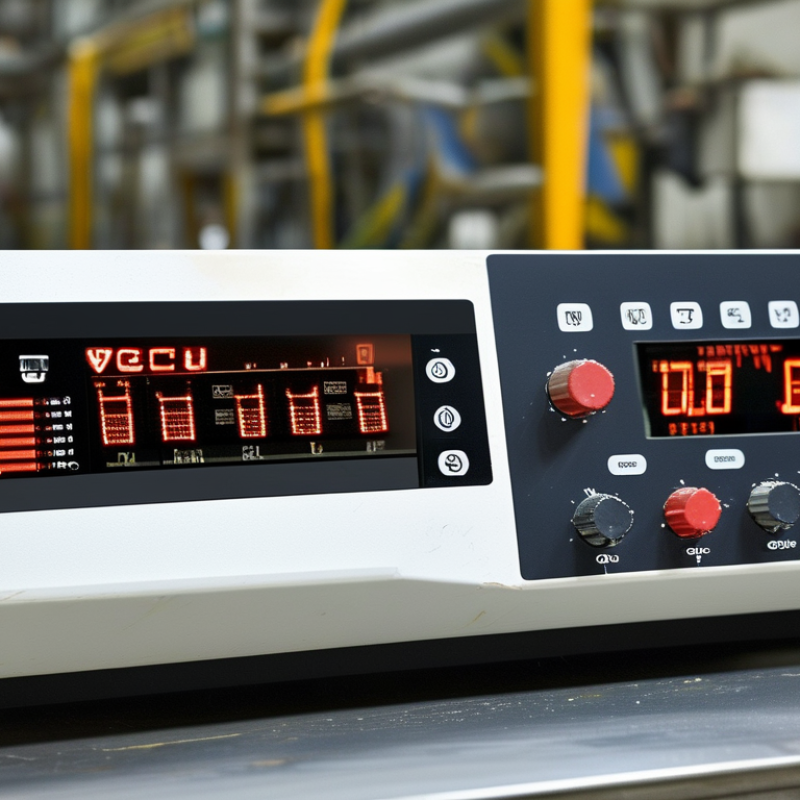
| Primary Function | Maintains a stable temperature for process equipment, molds, reactors, tanks, or heat exchangers. | The controller continuously adjusts heating and cooling to keep the process fluid close to the selected setpoint. |
| Common Heat-Transfer Fluids | Water for approximately 5–95°C; thermal oil for applications commonly reaching 150–300°C, depending on the fluid and system design. | The fluid transfers heat between the TCU and the connected process circuit. The selected fluid must be compatible with the operating temperature. |
| Heating Method | Electric immersion or inline heaters, typically sized from several kilowatts to more than 20 kW for larger systems. | When the measured temperature is below the setpoint, the controller energizes the heater, usually through staged or proportional control. |
| Cooling Method | Water-cooled or air-cooled heat exchanger; cooling-water requirements vary by process load and inlet temperature. | When the process temperature rises above the setpoint, a cooling valve or refrigeration circuit removes excess heat from the circulating fluid. |
| Temperature Control Accuracy | Typically about ±0.5°C under stable load conditions; actual performance depends on sensor location, flow, insulation, and heat load. | A temperature sensor measures the outlet or process temperature, and a PID controller compares it with the setpoint to correct deviations. |
| Circulation Pump | Typical process flow: approximately 10–100 L/min; pressure and flow depend on pump size and circuit resistance. | The pump circulates the heat-transfer fluid through the TCU and the connected equipment, helping distribute temperature evenly. |
| Control Strategy | Automatic PID control with digital setpoint entry; optional recipe, alarm, and communication functions may be available. | PID control reduces overshoot and temperature fluctuation by continuously matching heating or cooling output to the measured process condition. |
| Typical Sensors | RTD temperature sensor, commonly Pt100; additional sensors may monitor pressure, flow, level, and motor status. | Sensor feedback allows the control system to regulate temperature and stop the machine when an unsafe condition is detected. |
| Safety Protection | Common protections include over-temperature shutdown, low-fluid-level detection, pump overload protection, pressure monitoring, and emergency stop. | The safety system interrupts heating or circulation when operating limits are exceeded, reducing the risk of equipment damage. |
| Energy Efficiency | Improved by correct heater sizing, insulated piping, efficient heat exchangers, short circulation paths, and proportional control. | Accurate control prevents unnecessary heating and cooling, helping reduce energy consumption and process variation. |
| Typical Applications | Plastic injection molding, extrusion, die casting, chemical processing, pharmaceutical production, food processing, and laboratory testing. | A stable thermal environment improves product consistency, cycle repeatability, surface quality, and process control. |
| Main Selection Factors | Required temperature range, heating and cooling capacity, process flow, pump pressure, heat-transfer fluid, connection size, and control interface. | Correct sizing ensures the TCU can reach the target temperature quickly and maintain it under the maximum expected process load. |