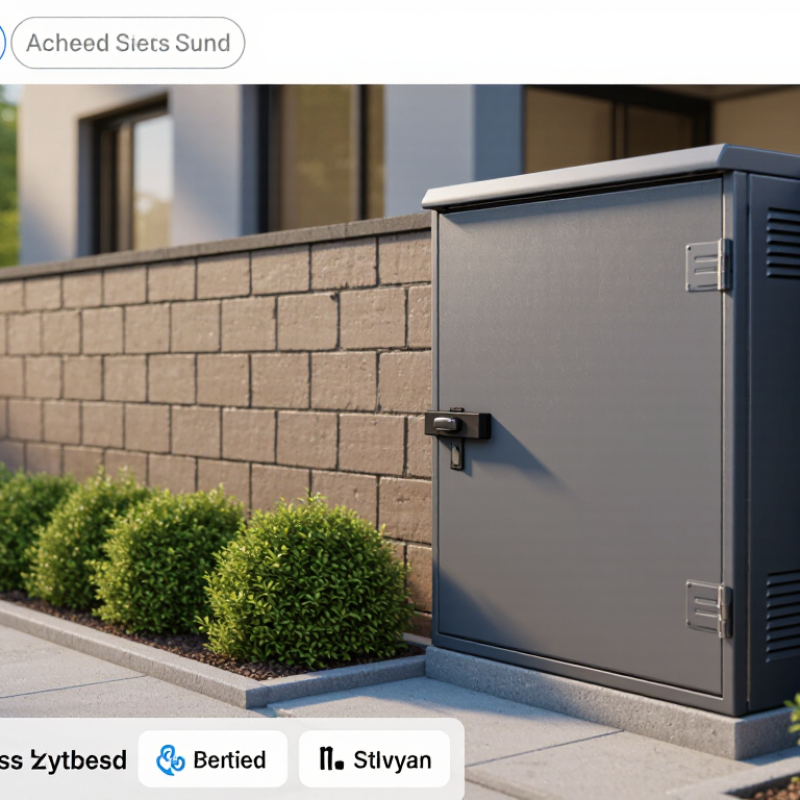
| What it is | A purpose-made enclosure fitted outside a building to house a utility meter and, where applicable, associated service components. | The enclosure provides a designated place for the meter while allowing authorised personnel to locate and read or service it. |
| Utilities it may serve | External meter boxes are commonly used for electricity, gas, or water meters. The required enclosure depends on the meter and local utility requirements. | A box should be selected for the specific service; an enclosure designed for one meter type may not be suitable for another. |
| Access and readings | A door or removable cover provides access to the meter display, connections, or reading mechanism. | External placement can make routine meter reading and authorised maintenance possible without entering the property. |
| Weather protection | Enclosures are made from weather-resistant materials such as suitable plastics, metal, or glass-reinforced plastic. Protection levels vary by product. | The housing helps shield the meter from rain, wind, and outdoor exposure, but it is not necessarily waterproof or suitable for every environment. |
| Physical protection | A sturdy enclosure helps reduce exposure to accidental knocks, dirt, and unauthorised interference. | The level of protection depends on the enclosure’s construction, installation, and condition; it does not replace safe installation or utility-approved security measures. |
| Typical location | It is often mounted on an accessible external wall or placed in another approved outdoor position. | Correct positioning keeps the meter reachable while avoiding obstructions. Required locations and clearances should be confirmed with the relevant utility or installer. |
| Installation | The enclosure must be securely fitted, correctly sized, and compatible with the meter, service entry, and mounting surface. | Installation requirements differ by utility, meter type, property, and local regulations. Work on meter connections should be handled by an appropriately authorised professional. |
| Maintenance | Periodic visual checks can identify a damaged cover, loose fixing, blocked access, or signs of water ingress. | Keeping the box accessible and reporting damage helps ensure that authorised readings and servicing can take place safely. |
| Ownership and responsibility | Responsibility for the meter, enclosure, and repairs can vary by location and utility arrangement. | Check the utility’s guidance or property documents before replacing, altering, or arranging work on a meter box. |
| Main advantages | Convenient access, a defined meter location, and added protection from everyday outdoor exposure. | These benefits can simplify meter access and routine servicing, provided the enclosure is appropriate, correctly installed, and kept in good condition. |