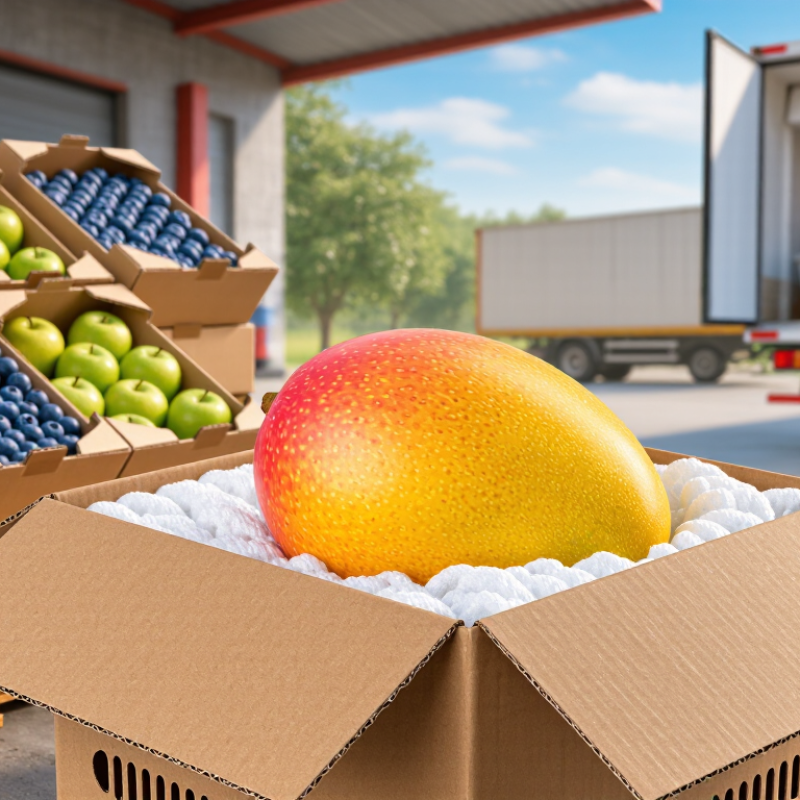
| Apples | 0–4°C, depending on cultivar and storage duration | 90–95% | Moderate respiration; apples produce ethylene and should be separated from ethylene-sensitive produce when appropriate. | Corrugated fiberboard cartons, molded trays, cell packs, or protective bags | Vent holes for forced-air cooling; liners should not trap free moisture. | Prevent bruising, scuffing, compression, and temperature fluctuation during pallet transport. | Rapid pre-cooling and stable refrigerated transport |
| Table Grapes | Approximately 0°C | 90–95% | Low to moderate respiration; sensitive to dehydration, stem browning, and mold development. | Vented corrugated cartons, plastic punnets, or clamshells with suitable liners | High ventilation and careful condensation management; packaging should support rapid cooling. | Protect bunches from crushing and berry shatter while maintaining airflow through the carton. | Fast removal of field heat and continuous low-temperature handling |
| Strawberries | 0–1°C | 90–95% | Very high respiration; highly perishable and prone to gray mold. Do not allow condensation to remain on the fruit. | Vented single-layer punnets or clamshells with rigid support | Maximum airflow with drainage and moisture management; avoid sealed packaging unless designed for the product. | Prevent compression, vibration, surface damage, and temperature abuse. | Immediate pre-cooling and uninterrupted refrigerated distribution |
| Blueberries | Approximately 0°C | 90–95% | Moderate respiration; susceptible to water loss, decay, and abrasion that removes the natural bloom. | Rigid vented clamshells or small retail punnets inside ventilated cartons | Vent openings should align with carton airflow channels; avoid excess free water. | Use rigid packs to limit vibration and crushing; reduce handling that damages the bloom. | Rapid cooling and stable high-humidity conditions |
| Cherries | Approximately 0°C | 90–95% | High respiration; prone to stem dehydration, pitting, cracking, and decay. | Vented plastic punnets, clamshells, or small fiberboard cartons | Allow rapid cooling while limiting condensation and direct contact with standing water. | Provide cushioning and headspace to protect stems and fruit from impact. | Hydrocooling or forced-air cooling followed by continuous refrigeration |
| Peaches and Nectarines | Approximately 0–1°C for mature fruit; avoid chilling-sensitive cultivars during extended storage | 90–95% | High respiration after ripening begins; ethylene production increases as fruit softens. | Single-layer trays, molded fiber packs, or ventilated cartons | Ventilation is needed for cooling; packaging should limit moisture accumulation and contact damage. | Use individual cells or trays to reduce bruising and pressure marks. | Rapid cooling with careful temperature management based on cultivar |
| Pears | Approximately −1 to 0°C, depending on cultivar | 90–95% | Moderate respiration; produce ethylene during ripening and can develop pressure bruises. | Layer packs, molded trays, or ventilated corrugated cartons | Balanced ventilation for forced-air cooling; use moisture-resistant materials when condensation is likely. | Individual separation helps prevent bruising, skin scuffing, and compression damage. | Cold storage and controlled ripening according to maturity stage |
| Citrus Fruits | Approximately 3–10°C, depending on species and cultivar | 85–95% | Low to moderate respiration; susceptible to rind injury, water loss, and some chilling disorders. | Ventilated fiberboard cartons, plastic crates, or net bags inside protective cartons | Use ventilation to remove field heat and reduce condensation; avoid excessive air movement that causes drying. | Resist compression and abrasion while protecting the rind from punctures and impact. | Product-specific refrigeration without excessive chilling |
| Mangoes | Approximately 10–13°C for mature-green fruit; lower temperatures may cause chilling injury | 85–95% | High respiration during ripening; produce significant ethylene and should be managed by maturity stage. | Ventilated cartons with molded trays, fiber dividers, or protective sleeves | Provide airflow for cooling while preventing excessive moisture loss and condensation. | Protect against impact, latex staining, compression, and skin abrasion. | Temperature-controlled transport matched to maturity and destination |
| Avocados | Approximately 5–13°C, depending on cultivar, maturity, and storage period | 85–95% | Moderate to high respiration; ethylene-sensitive during ripening and vulnerable to pressure bruising. | Ventilated cartons with dividers, molded trays, or protective inserts | Maintain airflow without excessive dehydration; avoid packaging that compresses the fruit. | Control impact, compression, and vibration; provide strong pallet stability. | Stable temperature management and ripening control throughout the supply chain |
| Bananas | Approximately 13–14°C for mature-green bananas | 90–95% | High respiration during ripening; highly sensitive to chilling temperatures and ethylene exposure. | Ventilated corrugated cartons with liners or molded support systems | Ventilation must support cooling and ethylene removal while limiting moisture loss. | Prevent crown damage, finger bruising, compression, and temperature-related skin injury. | Strict avoidance of chilling and controlled ripening after arrival |
| Pineapples | Approximately 7–13°C, depending on maturity and cultivar | 85–95% | Low to moderate respiration; vulnerable to chilling injury, dehydration, and mechanical damage. | Strong ventilated cartons, molded pulp supports, or protective sleeves | Use airflow openings while preventing excessive moisture accumulation around the crown. | Protect the crown, skin, and base from impact, puncture, and compression. | Temperature selected according to maturity and transit duration |
| Kiwi Fruit | Approximately 0°C | 90–95% | Low respiration in storage; ethylene exposure can accelerate softening and reduce storage life. | Vented cartons with molded trays, punnets, or protective liners | Support rapid cooling and maintain high humidity without allowing free water to remain on the fruit. | Limit abrasion and compression; maintain carton strength under humid conditions. | Continuous cold storage with ethylene management where required |
| Pomegranates | Approximately 5–7°C | 90–95% | Low respiration; susceptible to dehydration, rind browning, and decay from surface damage. | Vented corrugated cartons with dividers or molded trays | Use controlled ventilation and moisture-resistant carton construction where condensation may occur. | Prevent rind abrasion, crown damage, cracking, and compression during stacking. | Stable refrigerated handling with humidity control |
| Watermelons | Approximately 10–15°C | 85–90% | Low respiration; chilling-sensitive and vulnerable to impact damage and internal breakdown. | Heavy-duty corrugated cartons, reusable plastic crates, or protective pallet configurations | Packaging should allow airflow without creating excessive dehydration; avoid sealed packs for whole fruit. | High load-bearing strength, anti-roll stability, and protection from impact and vibration. | Avoid low-temperature exposure and maintain stable handling conditions |
| Table Figs | Approximately 0°C | 90–95% | Very high perishability; moderate to high respiration and rapid quality loss after harvest. | Rigid vented clamshells, shallow punnets, or single-layer trays | Prioritize rapid cooling, airflow, drainage, and prevention of condensation. | Single-layer support reduces crushing, skin splitting, leakage, and mold development. | Immediate pre-cooling and highly reliable refrigerated transport |
| Raspberries and Blackberries | Approximately 0°C | 90–95% | Very high respiration; extremely delicate and prone to leakage, mold, and mechanical damage. | Small rigid vented clamshells or shallow punnets | Maximize airflow and drainage; avoid excess headspace that permits movement. | Use rigid, shallow packaging to prevent crushing and berry-to-berry compression. | Immediate cooling and uninterrupted cold-chain distribution |
| Important: Temperature and humidity ranges are general commercial guidelines. Actual packaging specifications should be validated against fruit cultivar, maturity, harvest condition, transit duration, destination climate, pallet configuration, and applicable food-contact and export regulations. |