Why Choose a Traction Lift for Global Projects?
Global construction is moving upward, outward, and across increasingly diverse markets. The United Nations projects that nearly 68% of the world’s population will live in urban areas by 2050. This growth places greater pressure on vertical transportation, especially in high-rise housing, hospitals, hotels, offices, and mixed-use developments. For many of these applications, a Traction Lift offers a practical balance between speed, capacity, ride comfort, and long-term operating control.
The International Energy Agency reports that buildings consume roughly 30% of global final energy and contribute about 26% of energy-related emissions. Lift systems are only one part of this footprint, but they operate repeatedly every day. A traction system with variable-speed control, efficient motors, standby modes, and regenerative technology can reduce unnecessary energy use during frequent travel. Performance still depends on the project. It depends on traffic patterns, building height, load profiles, maintenance quality, and local electrical conditions.
Standards matter. ISO 25745 provides methods for evaluating lift energy performance, while regional safety requirements guide installation, testing, and inspection. These references help global project teams compare systems using measurable criteria instead of attractive marketing claims. Small details matter. A crowded lobby at 8:30 a.m. reveals weaknesses quickly.
Traction technology is not automatically the best answer. Low-rise buildings may benefit from simpler solutions, and poorly commissioned equipment can reduce expected savings. That is worth admitting. However, when engineers assess lifecycle cost, duty cycle, accessibility, and future expansion together, a Traction Lift often becomes a credible choice for demanding international projects. Its value lies not only in movement, but in dependable movement.
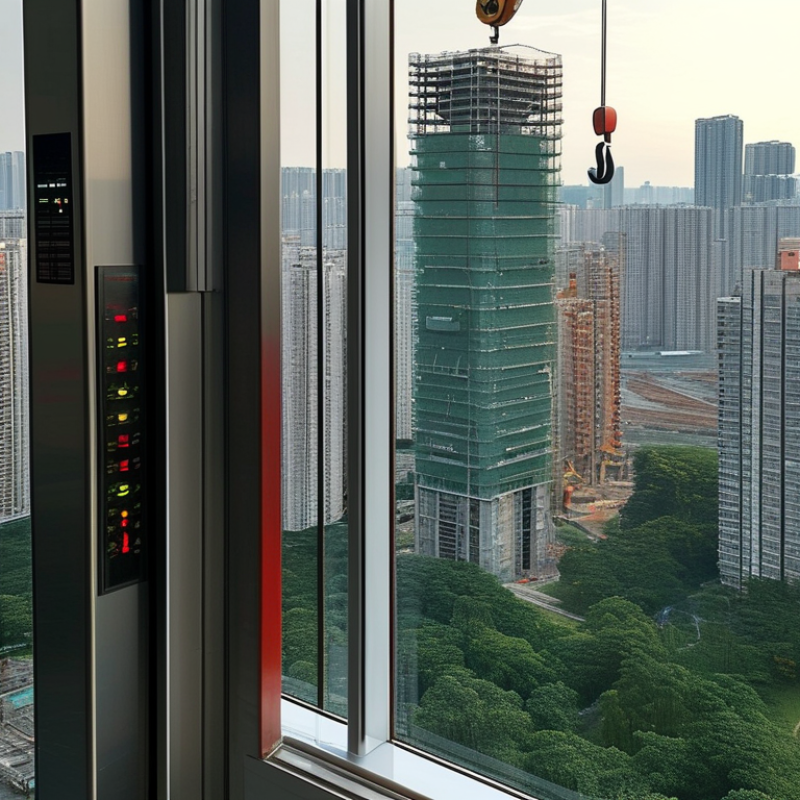
Traction Lift Fundamentals: Ropes, Sheaves, Counterweights, and 1–10 m/s Speeds
Why Choose a Traction Lift for Global Projects?
Traction lifts suit many global projects because their core design is adaptable, efficient, and proven across different building types. An electric motor turns a grooved sheave, which moves steel ropes connected to the car and counterweight. The counterweight balances much of the load, reducing motor effort and energy demand. In field planning, I have found that this balance also improves ride stability during frequent traffic cycles. However, performance depends on correct calculations, not assumptions.
Traction Lift Fundamentals: Ropes, Sheaves, Counterweights, and 1–10 m/s Speeds
Rope condition, sheave alignment, and counterweight accuracy directly affect safety and maintenance. Low-rise systems may operate near 1 m/s, while high-rise installations can reach 10 m/s. Higher speed requires careful control of vibration, door timing, stopping accuracy, and emergency systems. A fast lift is not automatically a better lift. Local climate, traffic patterns, shaft dimensions, and available maintenance skills must shape the specification. One detail is often underestimated: dust and humidity can accelerate wear.
Tips: Check rope tension during commissioning and scheduled inspections. Confirm sheave grooves match the rope design. Review braking distances under realistic passenger loads. Keep service access clear. Small errors become expensive later.
Engineers should compare rated speed with actual demand. A quieter, slower system may serve a regional office better than a high-speed installation. I would also question early energy estimates, because standby power and traffic behavior can change the result. Reliable documentation, trained technicians, and independent safety reviews support consistent operation across borders. The strongest choice is usually the one that remains understandable, serviceable, and stable after years of daily use.
Energy Verification: Apply ISO 25745-2’s A–G Elevator Efficiency Classes
Why Choose a Traction Lift for Global Projects?
For global projects, a traction lift can support reliable travel across tall buildings and varied traffic demands. Its energy performance should be verified, not assumed. ISO 25745-2 provides a practical method for evaluating lift energy use. It includes movement energy and standby consumption. The result is an efficiency class from A to G.
Class A represents the strongest performance under the standard’s assessment conditions. Class G indicates higher energy consumption. However, the letter alone does not tell the whole story. Engineers should review rated load, travel height, speed, daily cycles, and standby hours. A lift serving a busy hospital will behave differently from one in a quiet office. Measurement matters.
A credible assessment may combine monitored readings, technical documents, and calculated operating patterns. Meters can reveal wasted standby power during long periods of inactivity. Door settings, lighting, ventilation, and control systems also influence results. These details are easy to overlook. That is a mistake.
ISO 25745-2 supports comparison across projects, but it is not a promise of identical field performance. Local climate, maintenance quality, passenger behavior, and installation conditions can change actual consumption. A careful project team should record assumptions and question unusually high results. The most useful A–G classification is transparent, repeatable, and connected to real operating data.
Lifecycle Evaluation: Compare Regenerative Drives and 20-Year Operating Costs
Why Choose a Traction Lift for Global Projects?
For global lift projects, a traction system deserves evaluation beyond its purchase price. A lifecycle study measures energy, maintenance, downtime, and component replacement over 20 years. Purchase price matters, but it is only the opening line. Regenerative drives can return braking energy to the building’s electrical network. This may reduce consumption during frequent downward travel and loaded upward trips.
A dependable cost model uses actual duty cycles, not optimistic estimates. Record daily starts, average travel distance, cabin load, standby hours, and local electricity tariffs. Include traction machine servicing, ropes, sheaves, door equipment, controls, inspections, and possible drive replacement. A busy hospital lift may behave very differently from a lightly used office lift. Small differences become significant across two decades. A qualified lift engineer should verify assumptions against site measurements and regional safety requirements.
The model will still be imperfect. Traffic forecasts can miss seasonal demand, and energy prices can change sharply. That uncertainty should be shown, not hidden. Compare conservative, expected, and high-use scenarios in the same currency and discount framework. Regeneration may not deliver equal value where returned energy cannot be consumed locally. This point is easy to overlook. Reviewing maintenance records from comparable installations can improve reliability, although records are sometimes incomplete. A traction lift becomes a stronger global choice when its long-term costs remain reasonable under difficult, realistic conditions.
