Why Choose Melt Filtration Disc for Global Buyers?
For global polymer processors, material purity is not a minor production detail. It affects pressure stability, product appearance, equipment life, and customer confidence. A Melt Filtration Disc works quietly inside the extrusion line, yet its influence can be visible in every finished roll, sheet, or molded component.
Dr. Tim A. Osswald, a respected polymer processing authority, often emphasizes a practical principle: “Processing quality starts with controlling what flows through the machine.” This idea explains why international buyers examine more than disc price. They compare filtration accuracy, alloy strength, open-area design, thermal resistance, and compatibility with their equipment. A disc with consistent pores can capture gels, carbonized particles, and unmelted resin before they damage downstream quality. Small details matter.
Real factories make this choice under pressure. A filter may face continuous heat, abrasive contaminants, changing polymer grades, and limited maintenance windows. Buyers therefore need stable supply, clear technical data, and responsive support. A supplier’s sample report, dimensional tolerance, and batch traceability can reveal more than polished marketing language.
Still, no Melt Filtration Disc fits every line. That is the uncomfortable part. A finer screen may improve cleanliness but increase pressure drop. A stronger alloy may last longer but raise purchasing costs. Global buyers must balance purity, throughput, replacement frequency, and total operating risk. The right decision is rarely the cheapest one. It is the one that remains dependable when production conditions become less than perfect.
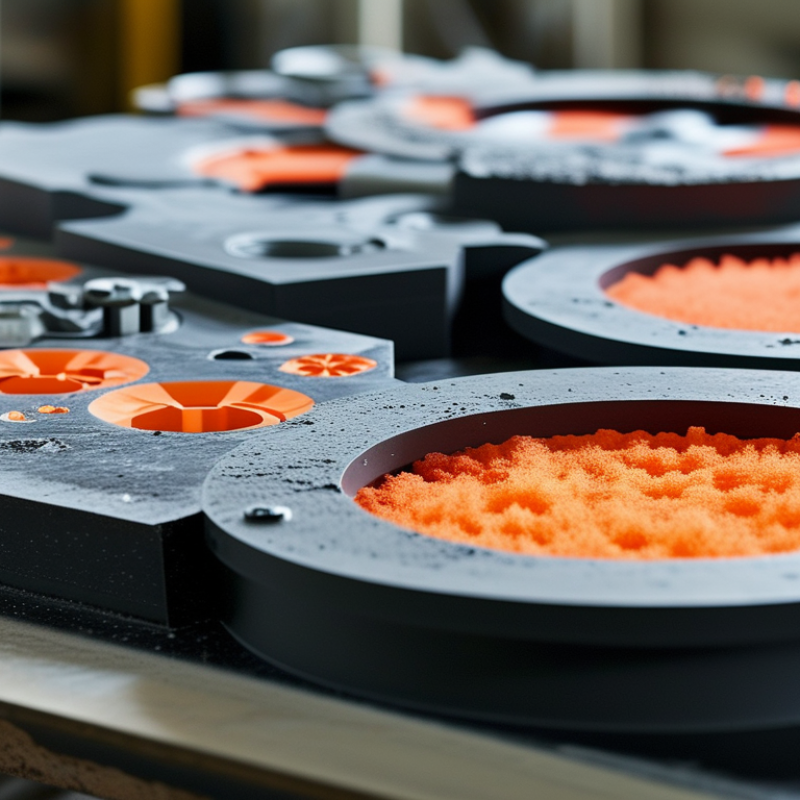
Melt Filtration Disc Fundamentals: 10–500 µm Ratings and Porosity
A melt filtration disc separates solid contamination from molten polymers, adhesives, and other process materials. Its rating usually ranges from 10 to 500 µm. Smaller ratings capture finer particles, but they can increase pressure drop and shorten service life. Larger ratings allow higher flow, though some contamination may pass through. The number alone is not enough.
Porosity also controls performance. A disc with open, interconnected pores can support stronger flow at the same nominal rating. However, pore shape, thickness, and metal structure affect actual filtration results. Buyers should confirm whether the rating is nominal or absolute. These terms are not interchangeable. A 50 µm nominal disc may not retain every particle larger than 50 µm.
In field evaluations, I check melt temperature, viscosity, contamination type, and target throughput before choosing a disc. Pressure gauges before and after the filter reveal loading behavior. A stable pressure difference often indicates suitable capacity. Rising pressure needs attention. It may signal excessive contamination, insufficient area, or an unsuitable pore structure. Material compatibility also matters, especially during repeated heating cycles. Stainless steel is common, but the correct grade depends on the melt and operating environment. A first trial may expose assumptions that looked reasonable on paper. Test data remains more reliable than a rating printed in isolation. Suppliers serving global buyers should provide dimensional tolerances, filtration data, cleaning guidance, and traceable inspection records.
Melt filtration discs are commonly specified by nominal pore ratings from approximately 10 to 500 µm. Smaller ratings target finer contaminant removal, while larger ratings generally support higher melt throughput with lower filtration resistance. The relative fineness index is calculated as 500 divided by the nominal micron rating. Actual porosity and performance vary with filter media, construction, polymer type, viscosity, pressure, and operating temperature.
Polymer Processing Performance at 200–350°C: Pressure Drop and Flow Rate
Why Choose Melt Filtration Disc for Global Buyers?
Polymer processing between 200 and 350°C demands stable filtration, not simply a fine mesh. PlasticsEurope reported 400.3 million tonnes of global plastics production in 2022. That volume increases the need for repeatable melt quality and controlled pressure. A disc filter can support this control when its pore structure matches the polymer and throughput.
At 200–240°C, polypropylene melt usually flows easily, but contamination still raises pressure drop. At 260–300°C, PET processing requires tighter thermal control and clean filter surfaces. Some engineering polymers run near 350°C, where oxidation and residence time become serious concerns. Practical filtration trials often target an initial pressure drop below 0.2 MPa, then monitor the rise toward 0.5 MPa. These values are guidelines, not universal limits.
Flow rate matters more than a catalogue number. A larger disc area lowers flux and can extend service time. According to filtration principles discussed in SPE ANTEC technical papers, pressure drop rises sharply as viscosity, contamination, or flow velocity increases. The relationship is rarely linear in production. It can surprise operators. Buyers should request test data at actual temperature, polymer grade, and screen loading. One overlooked detail is edge sealing. Small bypass paths may pass visible defects despite a low gauge reading. Temperature mapping also deserves attention; a cold spot can imitate poor filtration.
Why Choose Melt Filtration Disc for Global Buyers? - Polymer Processing Performance at 200–350°C: Pressure Drop and Flow Rate
Representative engineering reference values for a clean, circular sintered-metal melt filtration disc with a 50 mm outside diameter and approximately 1.0 mm thickness.
Nominal Filtration Rating
(µm) | Disc Area
(cm²) | 200°C | 250°C | 300°C | 350°C |
Viscosity
(Pa·s) | Flow at 1 bar
(kg/h) | ΔP at 100 kg/h
(bar) | Viscosity
(Pa·s) | Flow at 1 bar
(kg/h) | ΔP at 100 kg/h
(bar) | Viscosity
(Pa·s) | Flow at 1 bar
(kg/h) | ΔP at 100 kg/h
(bar) | Viscosity
(Pa·s) | Flow at 1 bar
(kg/h) | ΔP at 100 kg/h
(bar) |
| 5 | 19.6 | 450 | 8 | 12.50 | 180 | 20 | 5.00 | 90 | 40 | 2.50 | 55 | 65 | 1.54 |
| 10 | 19.6 | 450 | 16 | 6.25 | 180 | 40 | 2.50 | 90 | 80 | 1.25 | 55 | 130 | 0.77 |
| 25 | 19.6 | 450 | 38 | 2.63 | 180 | 95 | 1.05 | 90 | 190 | 0.53 | 55 | 310 | 0.32 |
| 40 | 19.6 | 450 | 60 | 1.67 | 180 | 150 | 0.67 | 90 | 300 | 0.33 | 55 | 490 | 0.20 |
| 60 | 19.6 | 450 | 85 | 1.18 | 180 | 215 | 0.47 | 90 | 430 | 0.23 | 55 | 700 | 0.14 |
| 100 | 19.6 | 450 | 120 | 0.83 | 180 | 300 | 0.33 | 90 | 600 | 0.17 | 55 | 980 | 0.10 |
Technical basis: The table uses representative shear-thinning thermoplastic melt viscosities of approximately 450, 180, 90 and 55 Pa·s at 200°C, 250°C, 300°C and 350°C, respectively. Flow values are estimated for a clean disc at a 1 bar pressure drop; pressure-drop values are linearly scaled to a 100 kg/h throughput. Actual performance depends on polymer grade, melt viscosity, contamination loading, disc permeability, screen-pack configuration, temperature stability, and effective filtration area. Operation at 350°C should only be used when the selected polymer and filter construction are thermally suitable.
Filter Configuration: Single-Layer, Multilayer, and Sintered Disc Designs
Why Choose Melt Filtration Disc for Global Buyers?
Global plastics production reached 413.8 million tonnes in 2023, according to Plastics Europe’s Plastics—The Fast Facts 2024. More recycled feedstock also brings dust, paper fibers, pigments, and unmelted particles into extrusion lines. The OECD projects plastic waste could reach 1,014 million tonnes annually by 2060. Filtration design therefore affects product consistency, pressure stability, and maintenance frequency.
Single-layer discs suit relatively clean polymer streams and lower initial filtration demands. Their open structure supports practical flow, but fine contamination can pass through. Multilayer discs combine different mesh grades. They provide staged filtration, helping protect downstream equipment when feedstock quality changes. However, tighter layers can increase pressure faster than expected. Operators should monitor melt pressure, temperature, and screen replacement intervals.
Sintered discs use bonded metal powder or compacted porous structures. Their controlled pores can deliver repeatable filtration and strong mechanical stability. They are useful where continuous operation and fine particle retention matter. Yet, pore geometry is not magic. Excessive contamination can still cause rapid blinding. In field assessments, the best configuration depends on polymer viscosity, throughput, contamination load, and cleaning capability. A larger disc is not automatically better. Testing with actual production material remains necessary. Data sheets help, but line behavior can be less predictable.