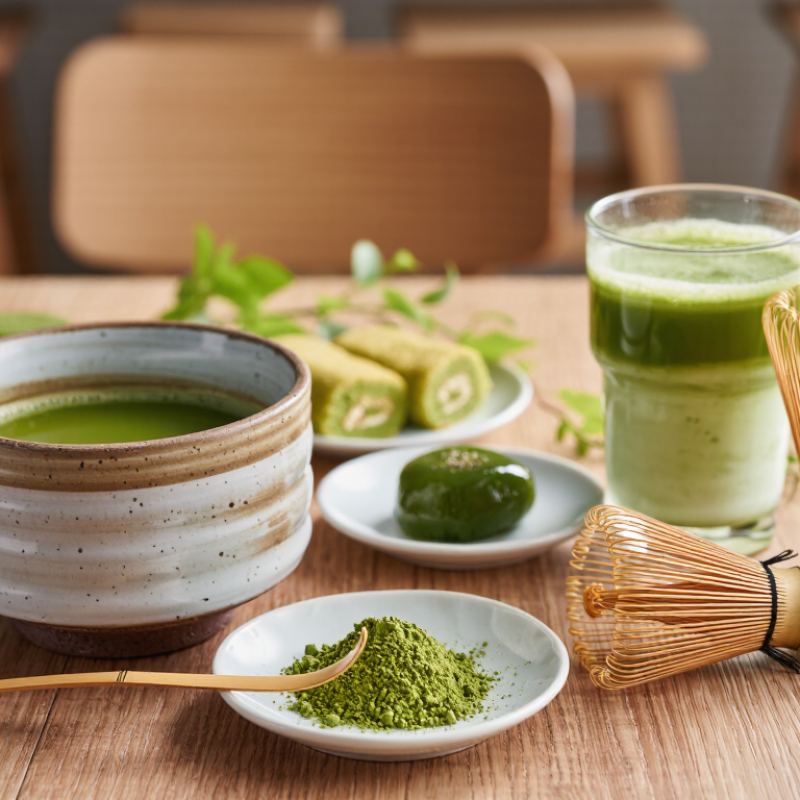
| Traditional-style tea | Matcha is whisked with water and served as a powdered tea. | Sift the powder if needed, add water, and whisk until evenly dispersed and lightly frothy. | Offers a focused, hands-on tea ritual and a distinctive vegetal flavor. | Because the powder remains in the drink, it is not prepared like a tea bag that is removed after steeping. |
| Matcha latte | Matcha is combined with water and milk or a milk alternative. | First disperse the powder in a small amount of water, then add steamed or cold milk. | The creamy texture can soften matcha’s grassy, slightly bitter taste and makes it suitable for hot or iced menus. | Sweeteners and milk change the drink’s flavor and nutritional profile. |
| Iced drinks and smoothies | Matcha is blended or shaken into chilled drinks, including smoothies. | Mix thoroughly with liquid or blend with fruit, yogurt, or other smoothie ingredients. | Its green color and recognizable tea flavor work well in refreshing, customizable drinks. | Powder can clump in cold liquid, so blending, shaking, or making a smooth paste first can help. |
| Baking and desserts | Matcha is added to cakes, cookies, pastries, ice cream, and other sweet foods. | Sift it with dry ingredients or blend it into a recipe’s liquid ingredients. | Provides color and tea flavor, allowing familiar desserts to be adapted with a distinct ingredient. | Heat, recipe balance, and ingredient quality can affect the final color and flavor. |
| Savory cooking | Small amounts may be incorporated into sauces, dressings, noodles, or seasoning blends. | Whisk into a liquid component or mix evenly with other ingredients. | Broadens matcha use beyond drinks and desserts for people exploring new flavor combinations. | Its concentrated, vegetal taste can become prominent, so it is generally added with care. |
| At-home daily routine | People prepare matcha at home as a morning drink, an afternoon beverage, or a caffeine-containing alternative to other drinks. | Use a whisk, shaker, or blender; adjust the amount of powder, liquid, and sweetener to preference. | A simple preparation method and flexible serving styles make it easy to adapt to personal routines. | Matcha contains caffeine. Caffeine content varies with the amount used and the product, and sensitivity differs between individuals. |
| Food-service menus | Cafés and food businesses use matcha across drinks, baked goods, and seasonal menu items. | Prepare as a standardized base, then combine with milk, ice, or recipe ingredients. | One ingredient can serve multiple menu categories and support a recognizable flavor and vivid green appearance. | Consistent measuring, dispersion, storage, and preparation help maintain a reliable result. |